
Helping Fantasy Hudl turn fantasy football data into a cleaner, more actionable product experience for league managers, football fans, and performance-focused fantasy players.
Fantasy Hudl was built for fantasy football enthusiasts who needed a better way to visualize match results, compare player performance, and manage leagues without jumping between fragmented tools. The idea was not only to create another fantasy sports dashboard, but to build a product foundation that could make football data easier to understand, compare, and use across multiple seasons.
The client wanted to move from concept to MVP with a platform that felt simple enough for everyday users, but flexible enough to support deeper performance analysis over time. This meant the product needed to combine usability, data clarity, league management, and technical scalability from the beginning.

The challenge was making fantasy football data easier to compare, manage, and act on.
Many existing fantasy football tools made users work too hard to understand player performance, league context, and season-by-season changes. Data was available, but not always presented in a way that supported fast decisions or enjoyable league management.
Fantasy Hudl needed to solve this with a more intuitive user experience. Users had to be able to compare players, track performance across seasons, review match outcomes, and manage league activity through a single platform that felt organized rather than overwhelming.
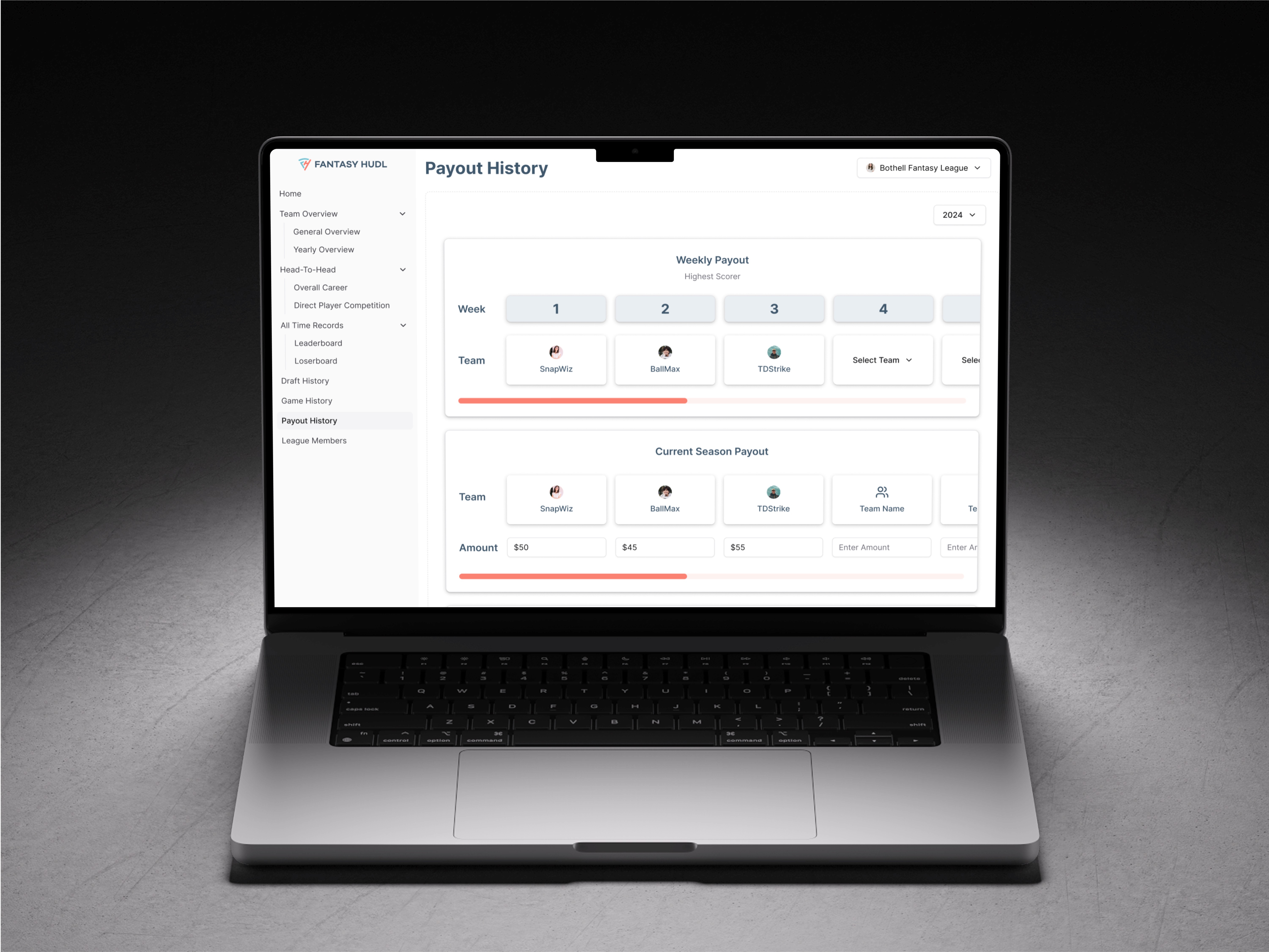
The challenge was also technical. Integrating fantasy football data from ESPN required a backend structure that could handle changing data formats, smooth updates, and future expansion into additional sources or features.
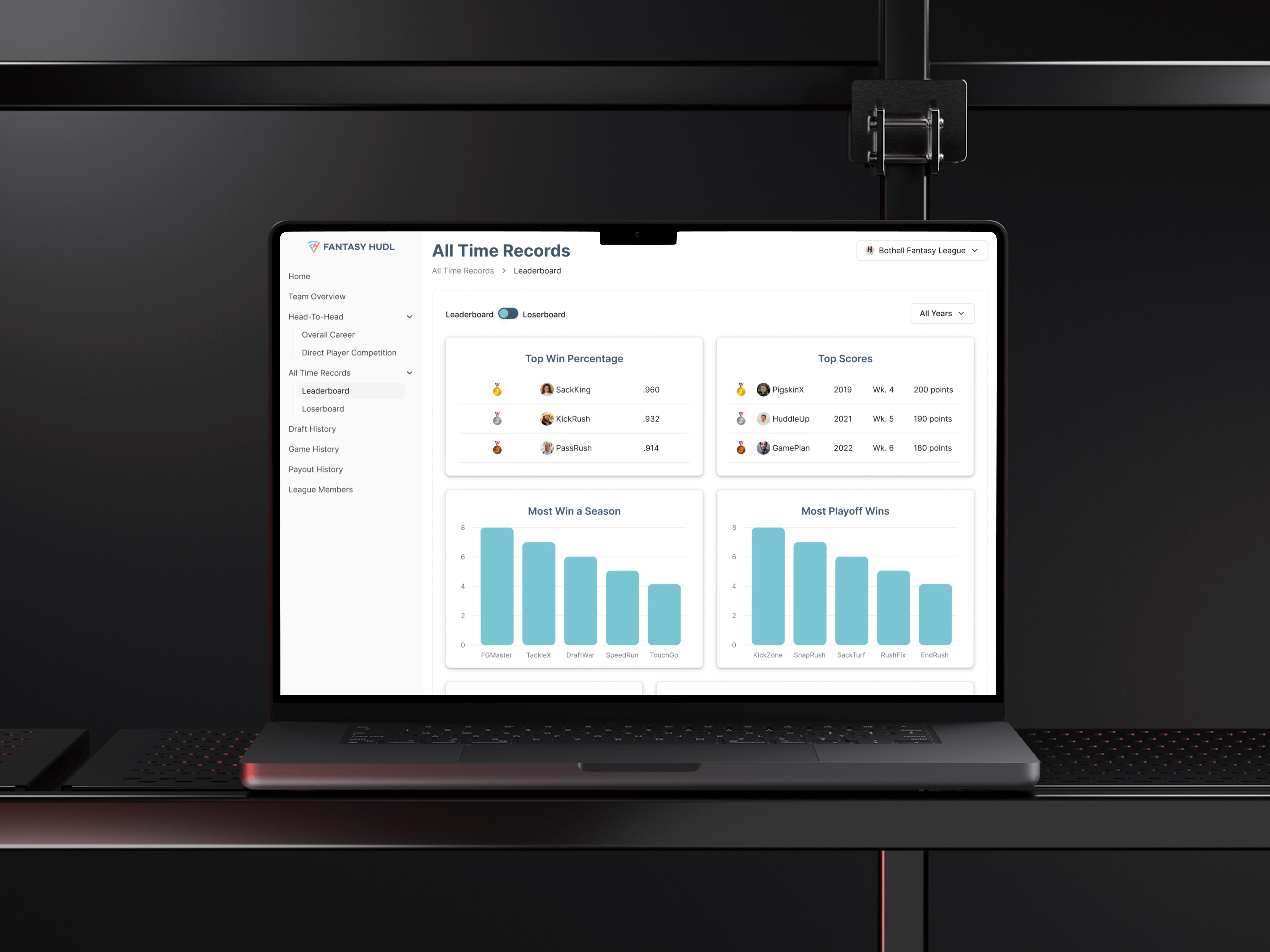
We built an MVP designed around usability, data visibility, and long-term product flexibility.
The solution focused on creating a user-friendly fantasy football dashboard where users could quickly understand match results, compare players, and manage league activity. The interface was structured around clarity, making key football data easier to scan, compare, and revisit across different seasons.
Role-based league management was included to support different user needs within the platform. This helped create a stronger operating model for leagues, giving users the ability to interact with data and league functions in a more organized way.
At the backend level, we built a modular architecture that could integrate ESPN data while remaining flexible for future data sources, feature additions, and product iterations. This helped reduce technical risk and gave the MVP a stronger foundation for long-term growth.
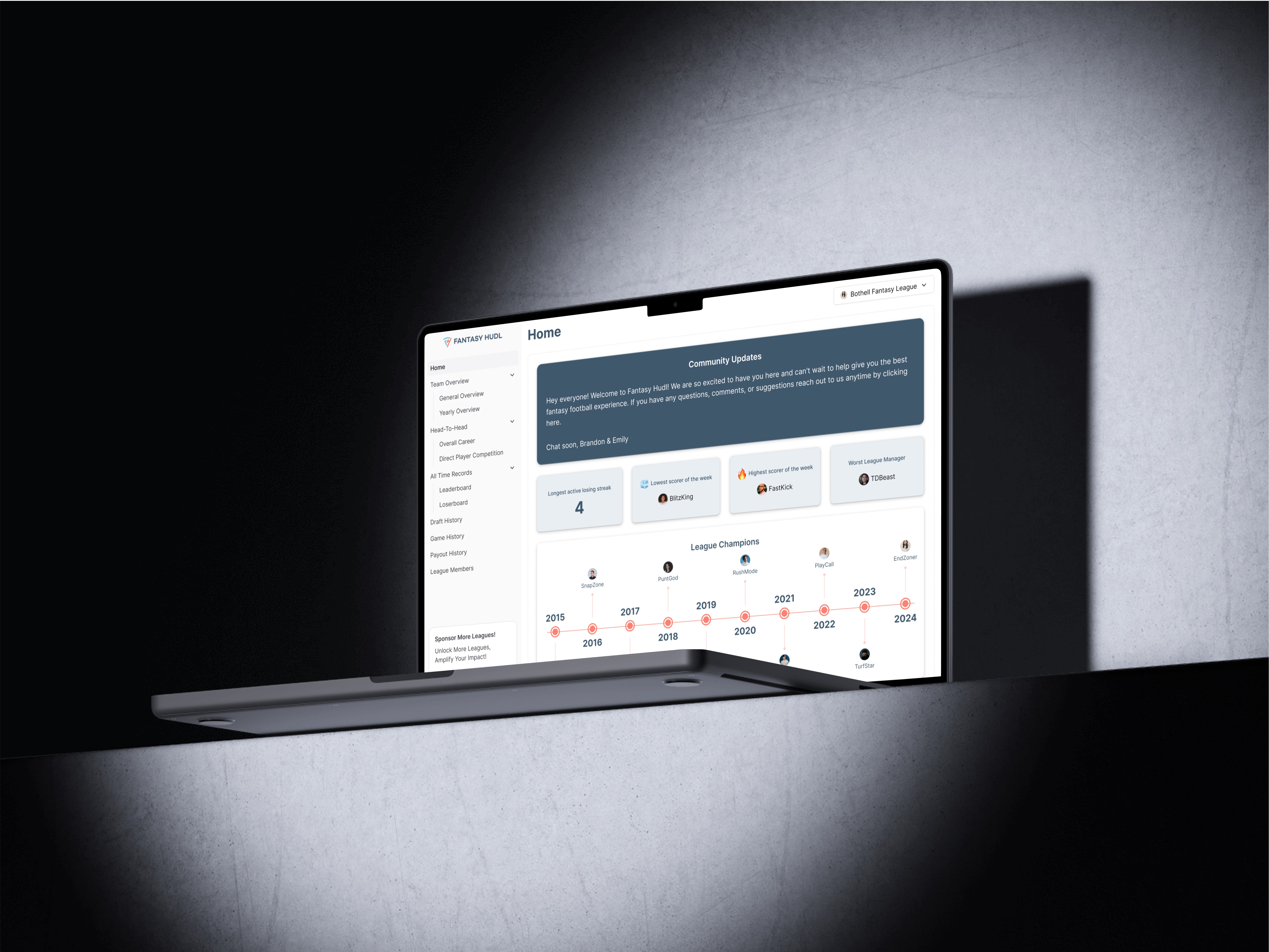
The product experience was shaped around fantasy football decisions, not just data display.
The core focus was to help users understand what the data meant in practical terms. Player comparisons, multi-season tracking, and match result visualization were designed to support real fantasy football decisions, from evaluating performance trends to managing league strategy.
Through close collaboration with the client, we identified the most important friction points in the user journey and shaped the MVP around those needs. The result was a platform that simplified fantasy football league management while still leaving room for more advanced analytics and product capabilities in future versions.
Built a fantasy football MVP for player comparison and league management
Integrated ESPN fantasy football data into a modular backend
Designed dashboards for match results, player performance, and multi-season tracking
Added role-based league management for better organization and user control
Created a flexible product foundation for future data sources and feature expansion
Delivered the MVP in 12 weeks
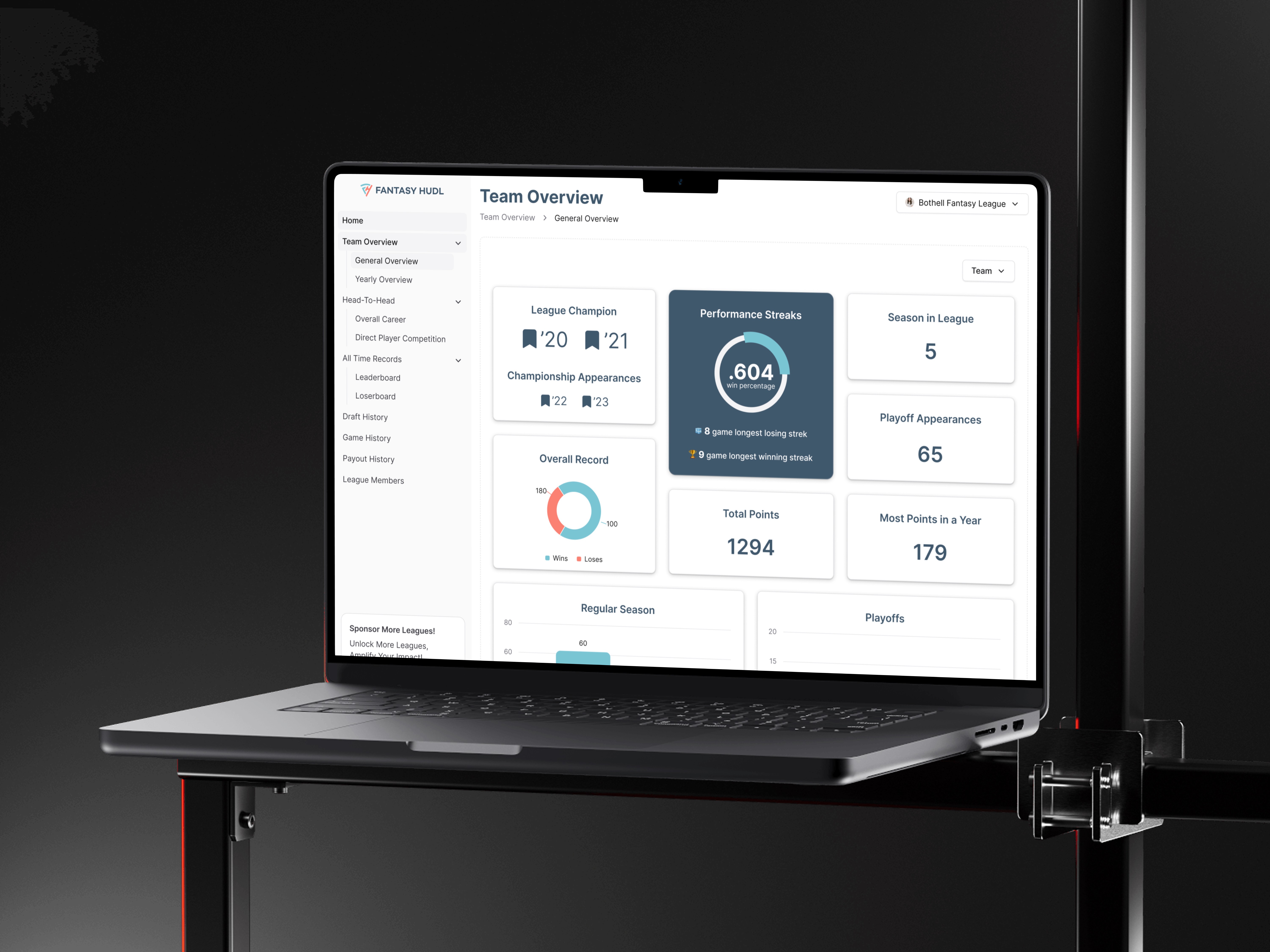
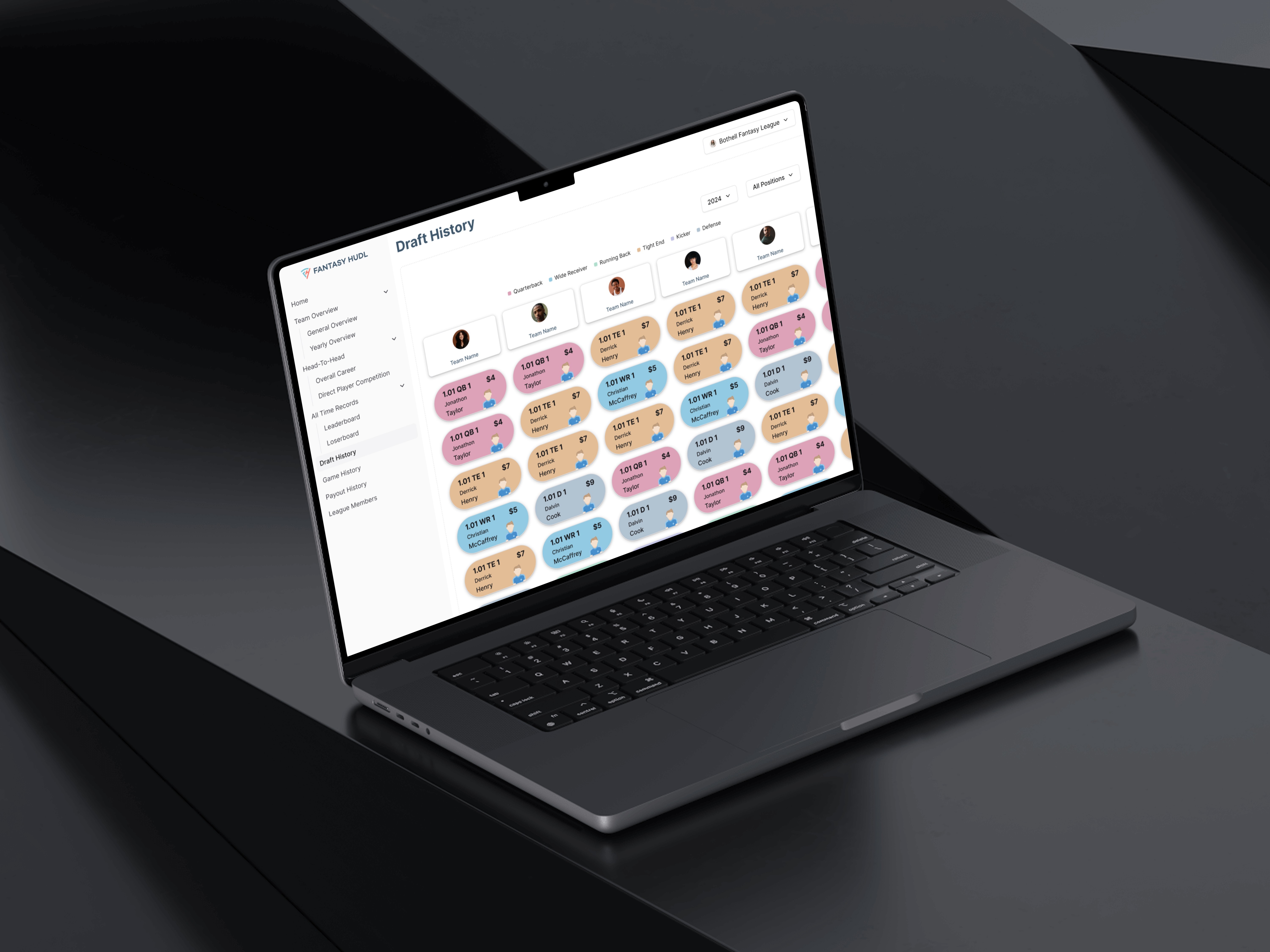
The result was a scalable product foundation for Fantasy Hudl’s next stage.
The final MVP gave Fantasy Hudl a clearer and more usable way to serve fantasy football users. Instead of relying on scattered tools or difficult-to-compare data, users could manage leagues, review performance, and compare players from one streamlined platform.
By combining product strategy, backend flexibility, and user-focused dashboard design, the project helped Fantasy Hudl move from idea to market-ready MVP with a stronger foundation for growth in the fantasy sports space.
The value of Fantasy Hudl was not only in showing football data, but in turning that data into a product experience that helps users manage, compare, and compete with more confidence.
More works.
" height="14.222232076856812px" id="MVwvIWkaW" transform="translate(21.333 28.444)" width="21.333339903089836px"/><path d="M 1.422 7.111 C 0.637 7.111 0 6.474 0 5.689 L 0 1.422 C 0 0.637 0.637 0 1.422 0 L 5.689 0 C 6.474 0 7.111 0.637 7.111 1.422 L 7.111 5.689 C 7.111 6.474 6.474 7.111 5.689 7.111 Z" fill="rgb(217, 45, 138)" height="7.111111111111086px" id="ySDQzQwB8" transform="translate(28.444 28.444)" width="7.111111111111313px"/><path d="M 32 17.778 L 32 19.911 C 32 20.696 31.363 21.333 30.578 21.333 L 26.311 21.333 C 25.526 21.333 24.889 20.696 24.889 19.911 L 24.889 17.778 Z M 17.778 24.889 L 10.667 24.889 L 10.667 19.2 C 10.667 18.415 11.304 17.778 12.089 17.778 L 17.778 17.778 Z M 17.778 32 L 17.778 39.111 L 12.089 39.111 C 11.304 39.111 10.667 38.474 10.667 37.689 L 10.667 32 Z M 32 10.667 L 24.889 10.667 L 24.889 1.422 C 24.889 0.637 25.526 0 26.311 0 L 30.578 0 C 31.363 0 32 0.637 32 1.422 Z M 24.889 17.778 L 17.778 17.778 L 17.778 12.089 C 17.778 11.304 18.415 10.667 19.2 10.667 L 24.889 10.667 Z M 24.889 46.222 L 32 46.222 L 32 55.467 C 32 56.252 31.363 56.889 30.578 56.889 L 26.311 56.889 C 25.526 56.889 24.889 56.252 24.889 55.467 Z M 32 17.778 L 32 10.667 L 37.689 10.667 C 38.474 10.667 39.111 11.304 39.111 12.089 L 39.111 17.778 Z M 32 39.111 L 39.111 39.111 L 39.111 44.8 C 39.111 45.585 38.474 46.222 37.689 46.222 L 32 46.222 Z M 56.889 26.311 L 56.889 30.578 C 56.889 31.363 56.252 32 55.467 32 L 46.222 32 L 46.222 24.889 L 55.467 24.889 C 56.252 24.889 56.889 25.526 56.889 26.311 Z M 24.889 39.111 L 24.889 46.222 L 19.2 46.222 C 18.415 46.222 17.778 45.585 17.778 44.8 L 17.778 39.111 Z M 10.667 24.889 L 10.667 32 L 1.422 32 C 0.637 32 0 31.363 0 30.578 L 0 26.311 C 0 25.526 0.637 24.889 1.422 24.889 Z M 39.111 32 L 46.222 32 L 46.222 37.689 C 46.222 38.474 45.585 39.111 44.8 39.111 L 39.111 39.111 Z M 39.111 24.889 L 39.111 17.778 L 44.8 17.778 C 45.585 17.778 46.222 18.415 46.222 19.2 L 46.222 24.889 Z" fill="rgb(217, 45, 138)" height="56.88889185587561px" id="rd1TZRx6X" transform="translate(3.556 3.556)" width="56.8888918558755px"/></g></svg>)
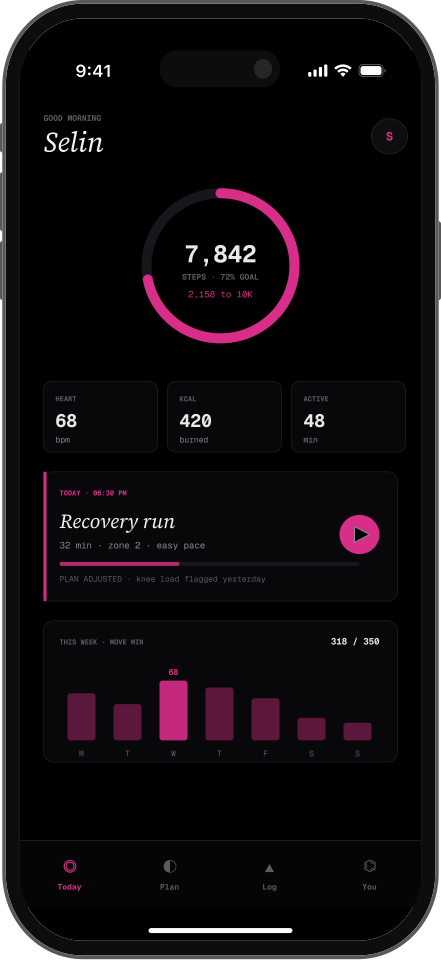
FitTrack – Fitness & Wellness Mobile App
This app helps users build better habits with Google Fit integration and real-time syncing.

Briefio AI
AI Academic Research Platform
A mobile-first academic research platform that turns dense research papers into concise summaries and audio-based insights for easier learning on the go.
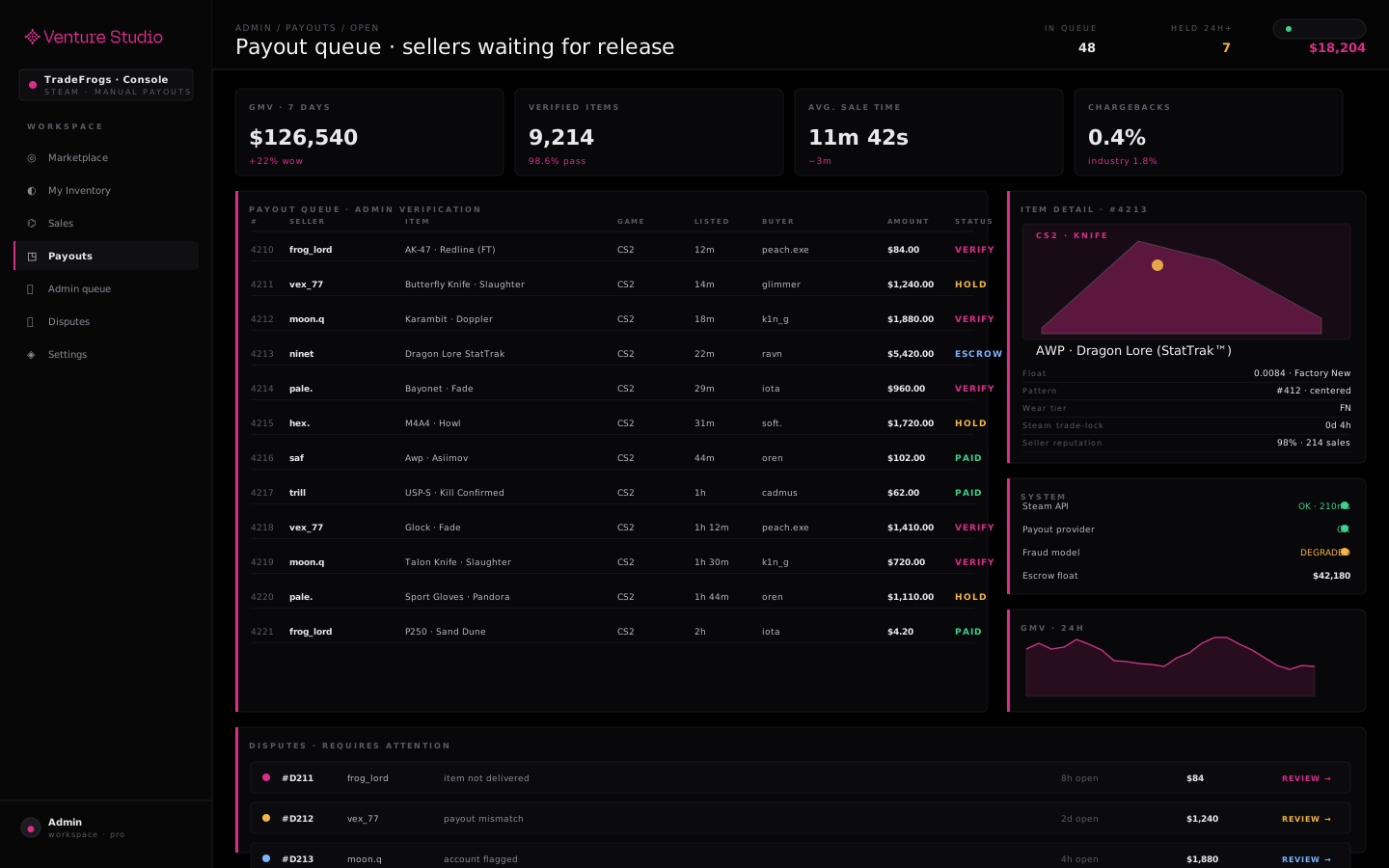
TradeFrogs - Gaming Marketplace Platform
Gaming Marketplace
TradeFrogs is a Steam-integrated marketplace for buying, selling, and cashing out in-game items. The MVP delivers secure, manually verified transactions, an admin-controlled workflow, and a scalable foundation.