
Vizio AI vs Halo Lab.
Halo Lab fits a company that wants one large agency for design, development and marketing, with 150+ people and 100 Clutch reviews at 4.9. Vizio AI fits a company whose product also needs BI dashboards and workflow automation, or whose existing build needs finishing. Both firms design and build; Halo Lab leads on design.
Which one fits.
Pick Vizio AI if
- After launch you need BI dashboards or workflow automation on your product's data, built by the team that built the product.
- You have a stalled codebase, no-code build or AI-built app and want it reviewed and finished rather than started again.
- You want to test the idea with a Validation Sprint before you commit to a full MVP.
- Design quality is the main risk, and you want an agency of 150+ people where design leads and development sits in-house.
- You want SEO, content and paid ads run by the same agency once the product or site is live.
- You build on Webflow, Sanity or Prismic and want an official partner of those platforms, rated 4.9 from 100 Clutch reviews.
Vizio AI and Halo Lab, compared.
services where Vizio AI goes further than Halo Lab
services both firms offer
product, data and growth in one team
The firms.
| Vizio AI | Halo Lab | |
|---|---|---|
| Istanbul, Türkiye | Dubai, United Arab Emirates | |
| Remote, working with clients in the US, UK, EU and Middle East | Offices in Boston and Warsaw, with a distributed team | |
| 2021 | 2013, in Ukraine | |
| 10 to 49 | 150+ people; 50 to 249 | |
| Building products, connecting data and automating operations, and growth systems, in three studios | Design and development for brands, with SEO, content and paid ads as a third line | |
| Validation Sprint, Free Data Assessment, Free Growth Audit, or a review of an existing build | A free estimate from an online calculator, or a call to plan the project | |
| Not published | Not stated publicly; no price list, and 2022 projects ranged from $5,000 to over $200,000 | |
| $5,000 | $5,000; $10,000+ | |
| 4.4 from 15 reviews | 4.9 from 100 reviews |
What each one sells.
| Vizio AI | Halo Lab | |
|---|---|---|
| Leads with it | Leads with it | |
| Leads with it | Leads with it | |
| Offered | Offered | |
| Leads with it | Not offered | |
| Leads with it | Not offered | |
| Offered | Offered | |
| Offered | Not offered | |
| Not offered | Offered | |
| Offered | Not offered | |
| Offered | Leads with it |
How they differ.
Both firms design and build
Unlike a pure design studio, Halo Lab builds what it designs. Its MVP page combines product strategy, UX/UI design and development, with a launch in about three months, and its service menu lists front-end, back-end and mobile development. So the usual case for Vizio AI, one team from first screen to working code, applies to Halo Lab as well. The real differences are in how much weight each firm puts on design, and in what each one does before and after the build.
Design depth
Halo Lab describes itself as a design and tech agency, and on Clutch its work is spread across web design, AI and web development, branding and UX/UI. Vizio AI lists design as a service it offers, not one it leads with: it designs the products it builds, such as a career platform with a built-in resume builder and Algolia search. One low-scored Vizio AI Clutch review calls its mobile responsiveness and UI/UX below standard, and another describes missed milestones. If design is the deciding factor, Halo Lab has the deeper bench and the longer review record.
After launch: marketing or data
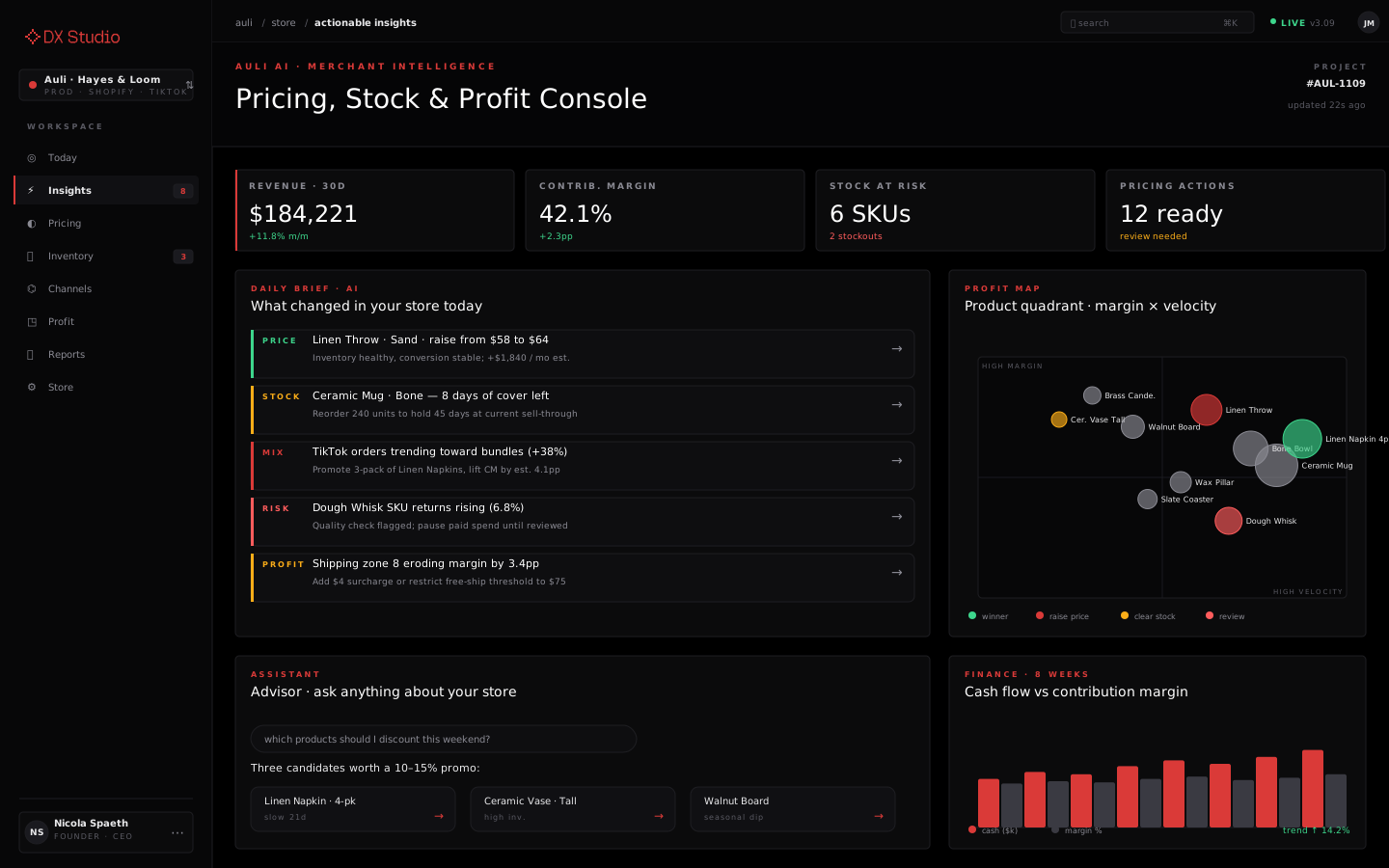
Halo Lab's third line is marketing: SEO, content and PPC through a separate growth team. Vizio AI's third line is data and automation: its DX Studio builds BI dashboards, and its case studies include dashboards for legal, real estate and sales teams. Auli AI, an AI SaaS product Vizio AI built for small e-commerce store owners, uses multi-agent logic to turn store data into pricing, inventory and profit insights. Choose by what the product needs next: more traffic, or better use of the data it already produces.
Entry size and where you start
Halo Lab's pricing page says it takes projects from $5,000 and that its 2022 projects ran to more than $200,000; Clutch lists its minimum as $10,000. Vizio AI's Clutch minimum is also $5,000, so entry size does not separate the two. The starting point can. Vizio AI's finish-your-build offer takes over existing codebases, no-code builds and AI-built apps after another team has left, while Halo Lab's MVP page describes defining and building a new product from a fresh scope.
Questions to ask both.
Who on your team designs and who builds, and do they work on our project at the same time?
What does a project at our budget include, and what is left out?
After launch, who maintains the product, and how is that priced?
Can we see a project where you took over or extended work that another team started?
Vizio AI work behind this page.
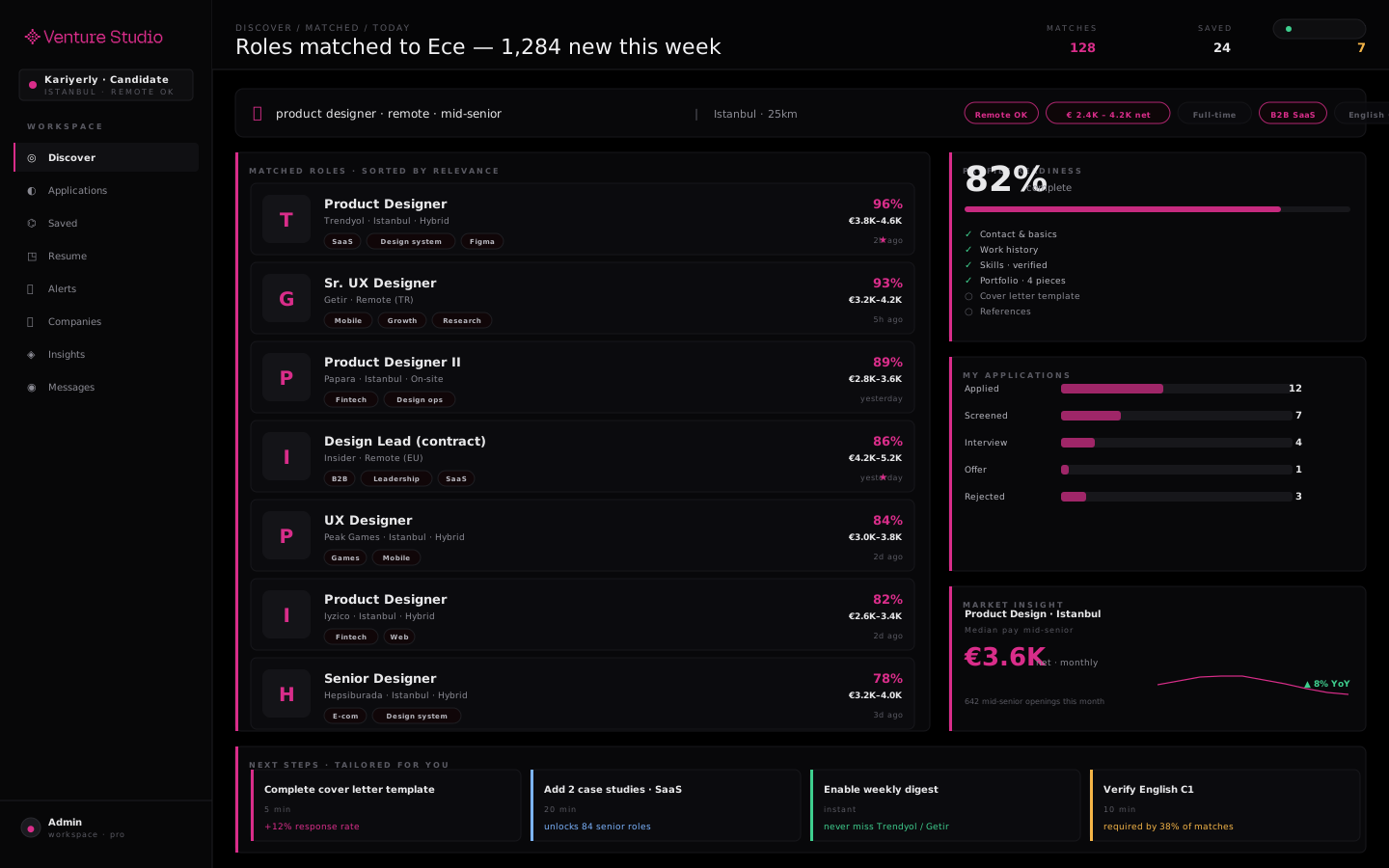
This platform surfaces roles that fit users’ values, goals, and skills cutting the noise for faster, smarter career moves.

Working on this project made it clear that job searching isn’t just about listings, it’s about momentum. Users often feel stuck not because there aren’t roles, but because they don’t know how to find the right ones or what to do next.
Product Development
FAQs.
Sources.
Published by Vizio AI, one of the two firms compared; not an independent review. Last updated November 2026: facts about Halo Lab come from these pages, read on 13 Nov 2026. Something out of date? Tell us.

Eleken fits a B2B SaaS team that already has developers and wants a dedicated product designer on a monthly subscription, at prices it publishes. Vizio AI fits a team that needs the product built as well as designed, or wants dashboards and automation around it. On design alone, Eleken is the stronger specialist.

Ramotion fits marketing and product leaders who want a US brand and product design agency, with clients such as Stripe and Netflix, and a budget of $50,000 or more. Vizio AI fits a smaller first project from $5,000, or a product that needs data dashboards and automation built with it. Ramotion leads clearly on brand and design.

Goodspeed fits a funded startup that needs a marketing site, landing page or no-code MVP at a fixed, published price. Vizio AI fits a company whose need sits behind the website: a custom product, a BI dashboard, an automation, or an existing build that has to be finished. Vizio AI publishes no prices.