The bid is due Friday and every duct is still uncounted.
Before a sheet metal shop can price a job, someone has to count and measure every duct, elbow, damper, tap and flex box on the mechanical plans. Estimators do it sheet by sheet, and one plan set can take days.
Those days decide how many jobs a shop can bid. The people behind SheetMetalAI are HVAC contractors, and they wanted a tool that does the first count, prices it the way their shop prices, and leaves the final call to the estimator.
Mechanical bids still arrive as PDF plan sets, and manual takeoff still caps how many bids a shop can send each week. Rival tools sell on accuracy percentages a buyer cannot check, so a takeoff the estimator can see and correct on the plan is the honest pitch.
From mechanical PDF to priced quote.
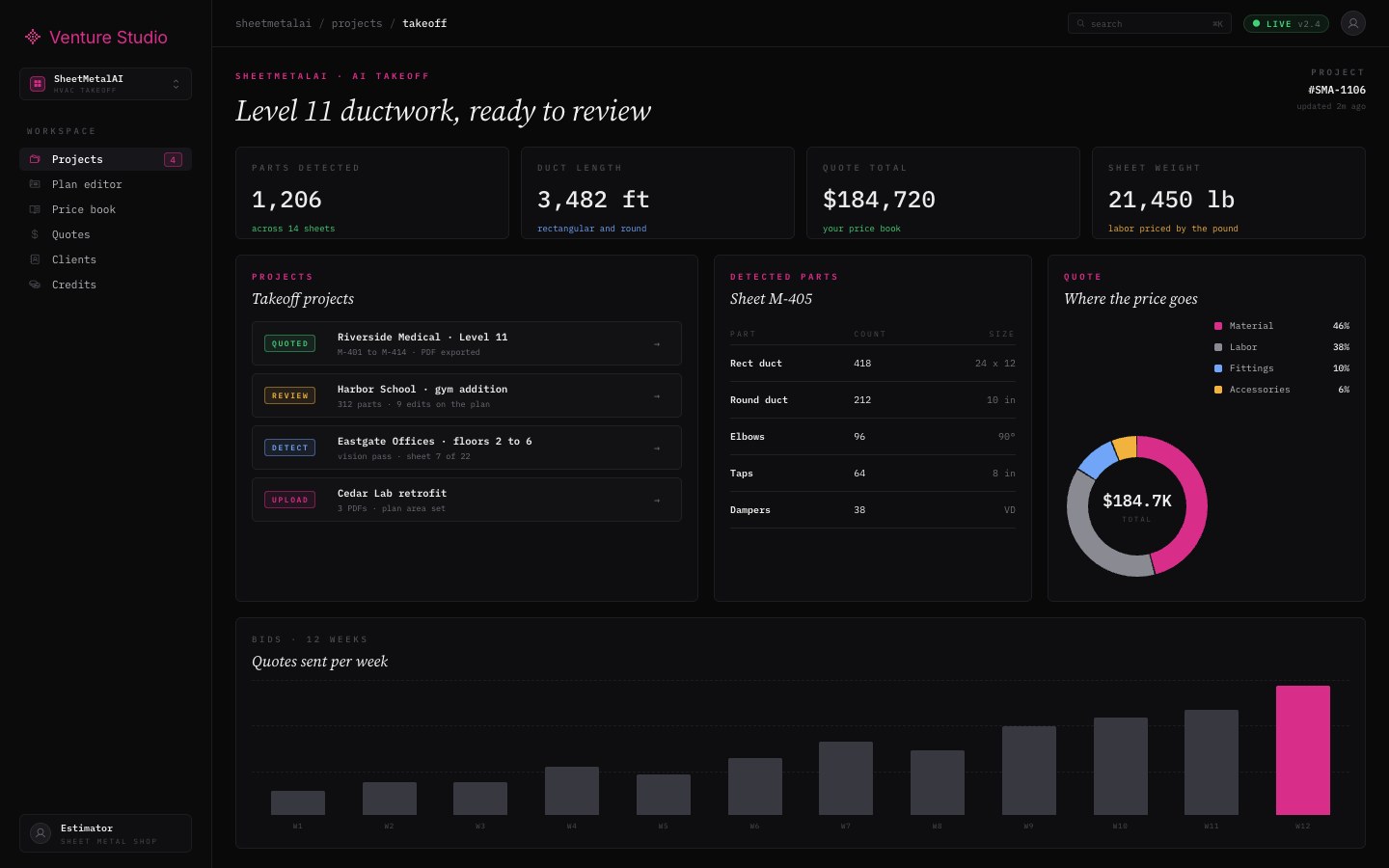
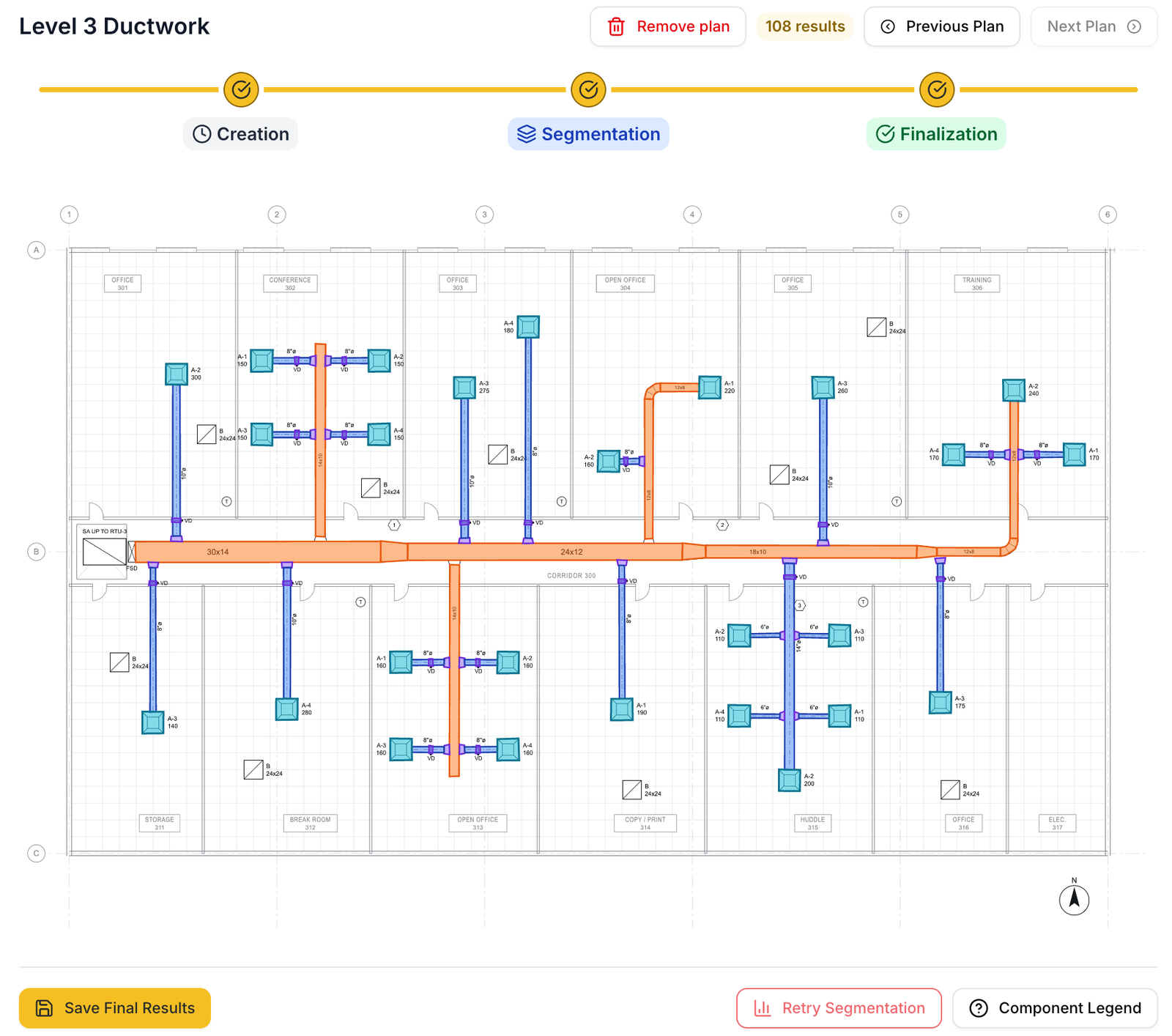
Five AI stages turn a plan set into a takeoff, and the estimator checks the result before a single dollar is added. A vision language model reads the sheets, a segmentation model traces the ductwork, and a second pass reads sizes and links every part. The shop's own price book does the pricing.
Inside the takeoff.
Real screens from the app, running on a sample office plan set.

Plan in, quote out in 17 weeks.
We started with the hardest part, reading a plan, and had the upload talking to the vision pipeline in the first days. The editor, accounts, billing and pricing followed until the loop from PDF to quote worked. Since launch the models and the product have kept improving: tiled multi-scale detection, flex box detection, a per-class accuracy gate on every model change, labor priced by the pound and client records.
Built for an estimator who checks every count.
A takeoff the estimator cannot check is a takeoff they will not send, so every step shows its work on the plan. These loops run the real app on a sample plan set.
The estimator stays in charge
Every detection can be resized, retyped or removed on the plan before anything is priced. Sizes the model cannot read are flagged instead of guessed.
The shop's own numbers
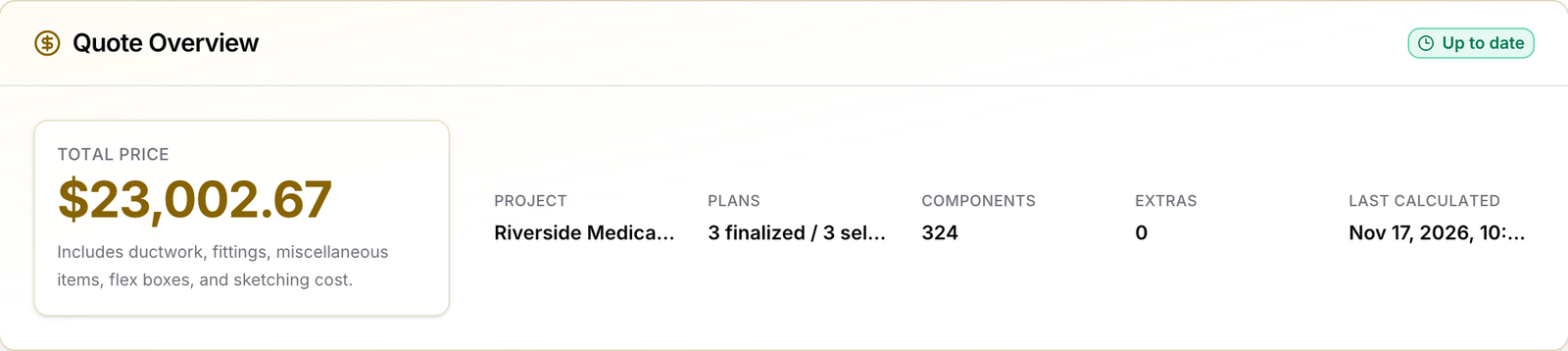
Each shop keeps its own price book, flex box rules, sketching hours and labor by the pound. Prices freeze per project, so an old quote never shifts.
Output a customer can read
One download holds the PDF quote, with weights, liner and totals, plus the marked-up plan images behind it.
What changed.
Less estimator time per takeoff
More bids sent per estimator each week
Parts counted and priced on a three-sheet sample job
Any trade that still prices work by counting items on drawings, such as electrical, plumbing or fire protection, fits the same pattern: a model does the first count, the expert corrects it on the drawing, and their own price book turns it into a quote.
Still counting items on drawings by hand?
Tell us what your estimators do today. We reply with how we would build it and a rough timeline.