We have more data than ever and still decide on gut feel.
A label or management company follows its songs across streaming services, short video, Shazam, playlists and paid campaigns. Each source has its own dashboard, its own counting rules and its own bad days. Pulling it together for a weekly meeting took hours of spreadsheet work, and by then the moment had often passed.
So the big calls were made on instinct: which song gets ad money, which gets a playlist push, which should be left alone. Nobody could say with confidence whether a spike was real fans or a data glitch.
The volume keeps growing. Luminate counted around 120,000 new tracks reaching streaming services every day in 2023, so every song competes with a larger catalog for the same attention and the same ad budget. A team that cannot read its own numbers quickly spends where it guesses, not where it should.
From raw plays to a decision.
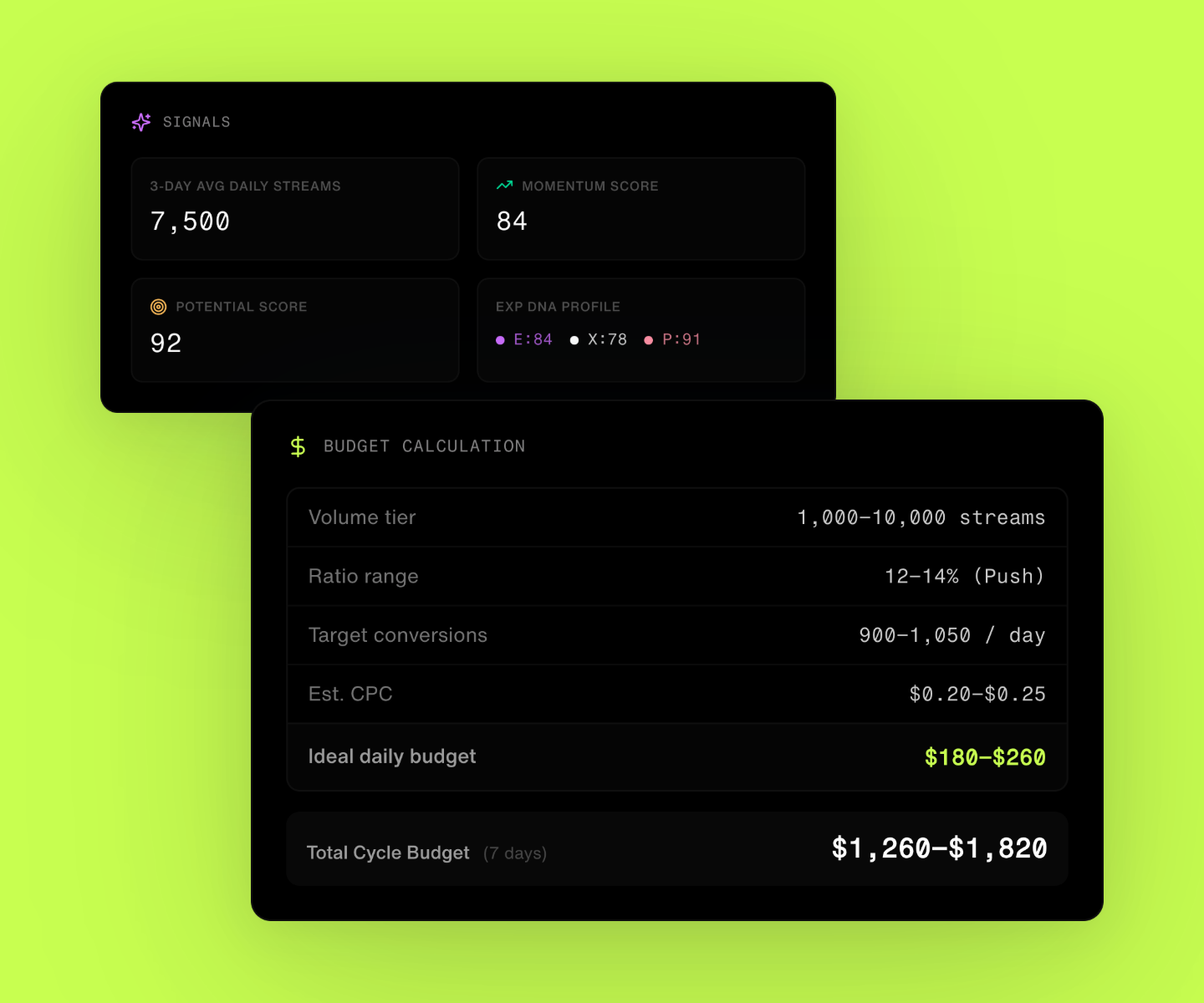
Every morning the platform turns scattered platform data into one answer per song. Numbers that fail a check never reach a score, and every score ends in a state the team can act on.
Inside the product.
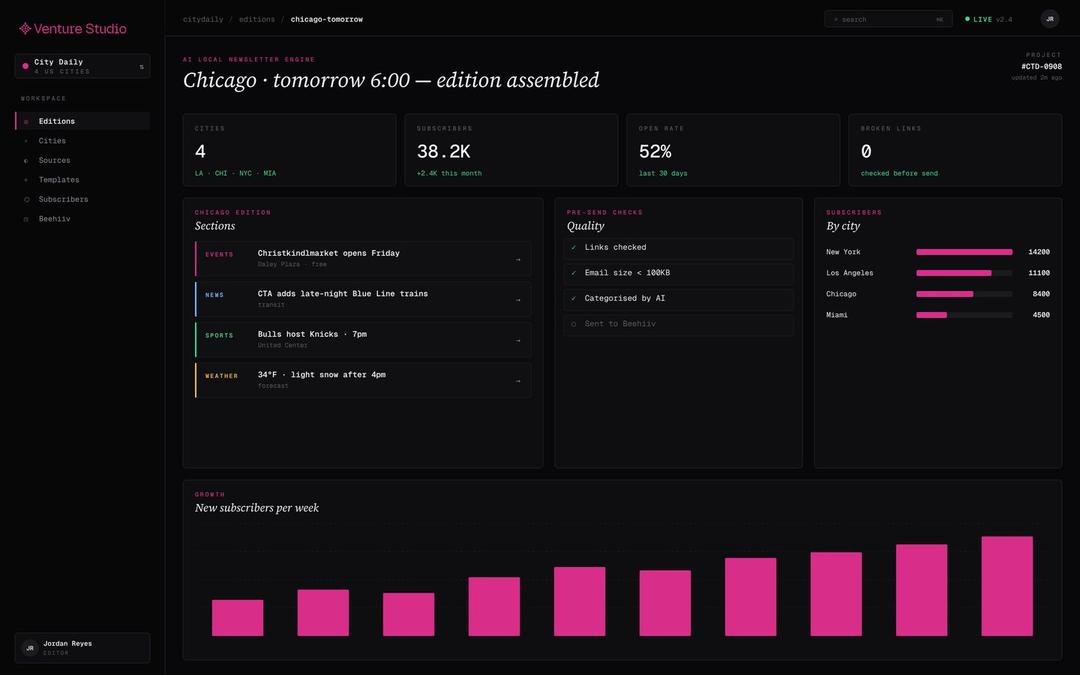
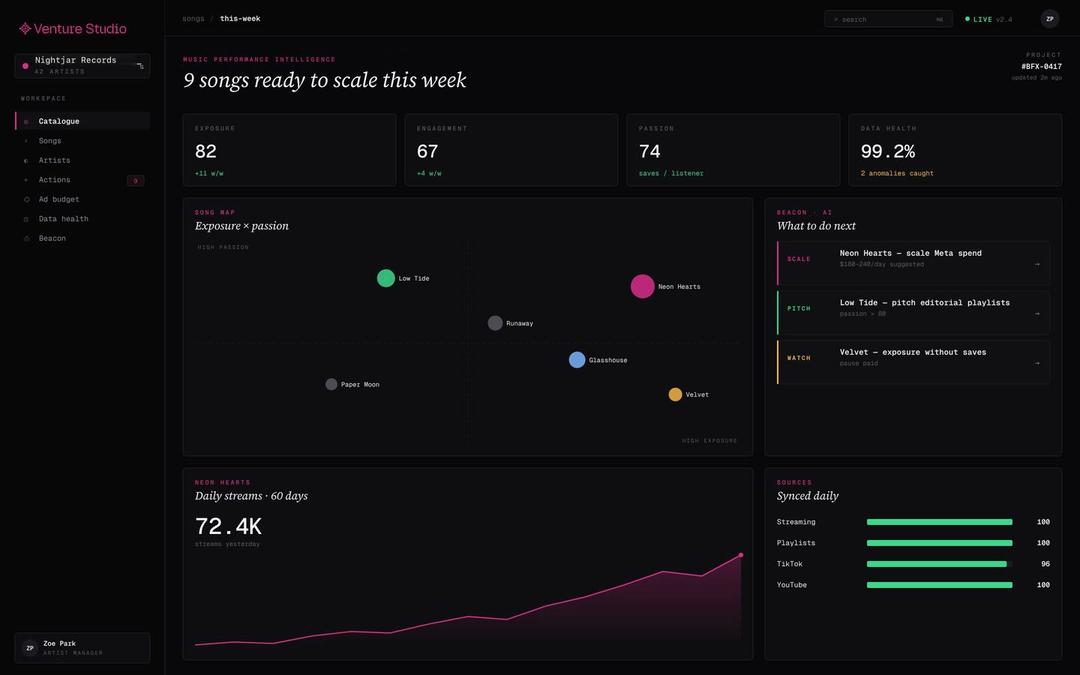
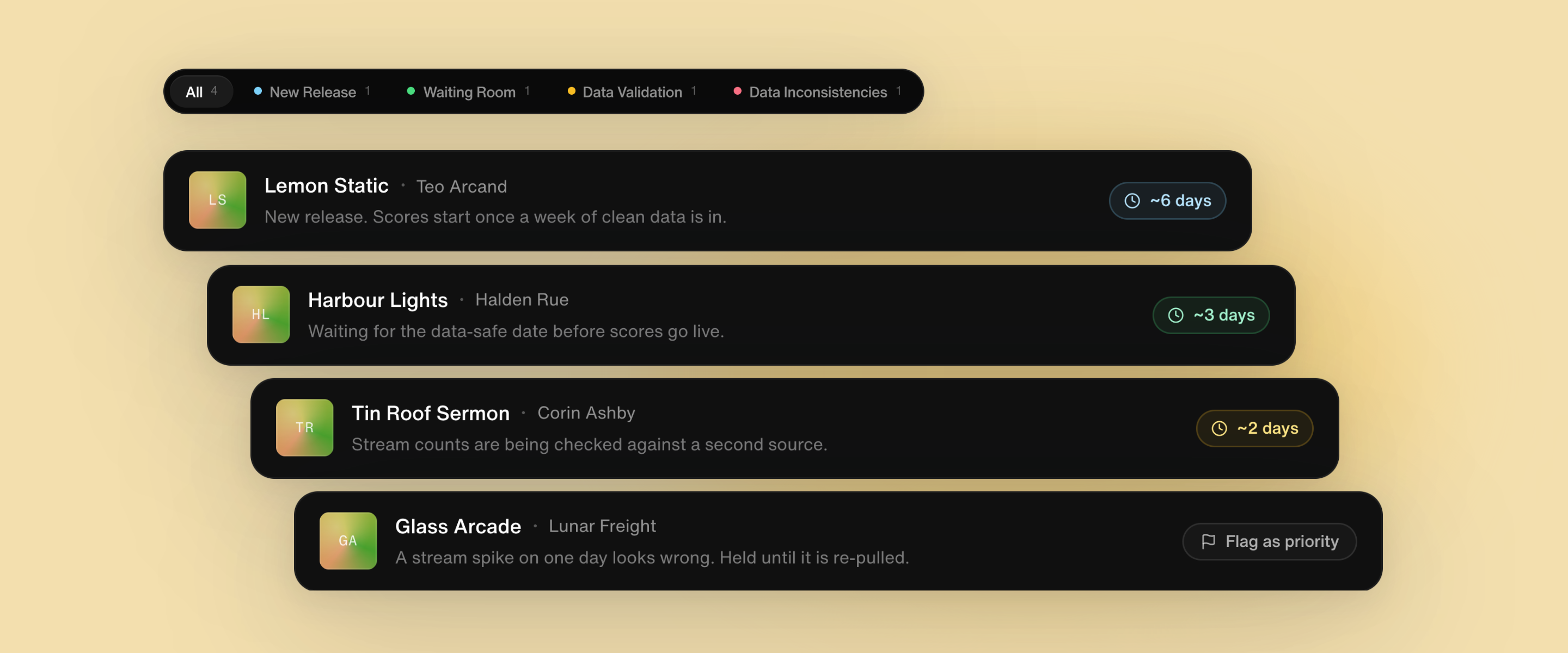
Four moments from the running app, enlarged, shown with an invented label, artists and songs.
Twelve weeks to launch, one release a week.
Vizio AI started from a working base for accounts and billing, so the first weeks went into the music data itself. The client's analysts checked each score against songs they knew well, and every weekly release answered the feedback from the week before.
A morning view for people who move money.
Managers and label teams open it before their first call, so the home screen answers one question: where should effort go today. Every number links back to the signals behind it, and the assistant sits beside every screen. These loops come from the running product with invented artists and songs.
Three scores, one state
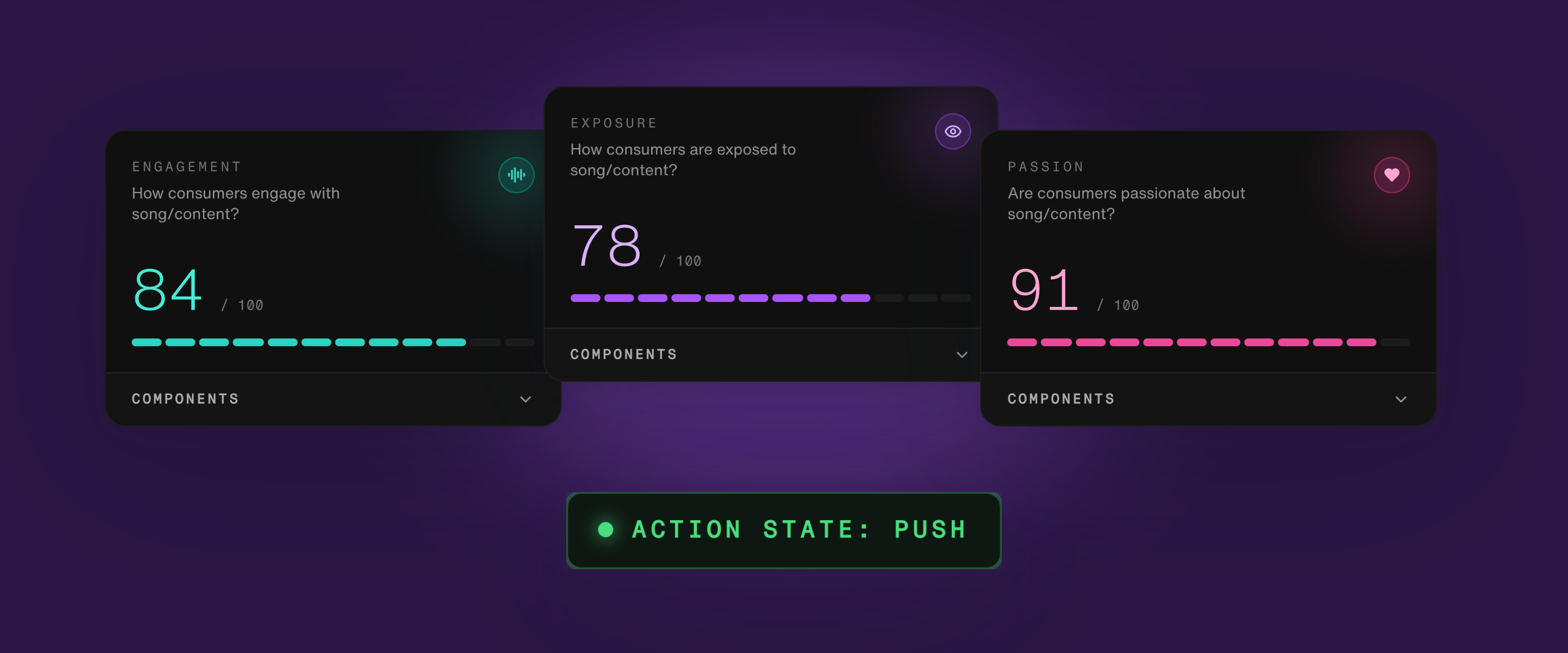
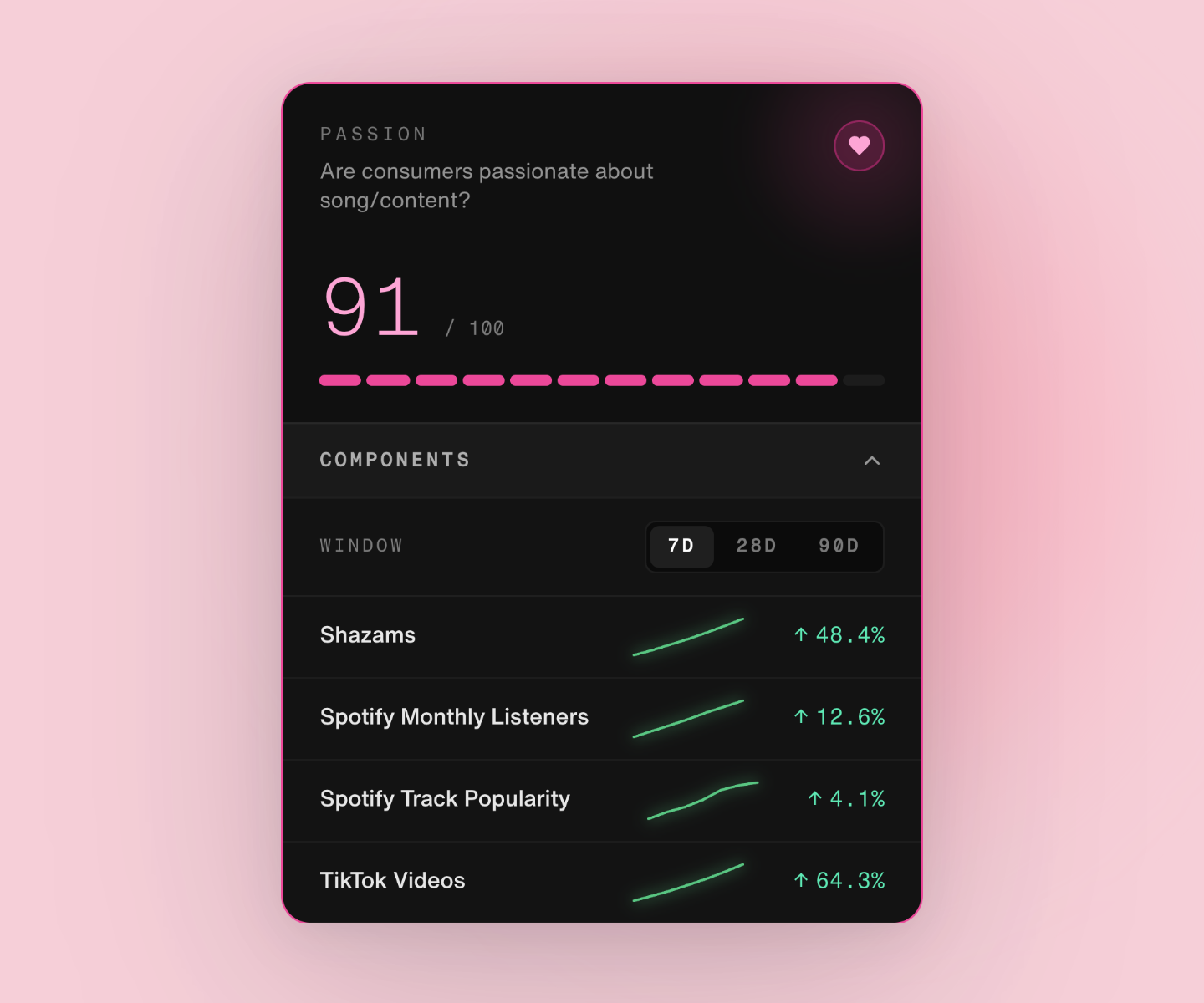
Exposure asks whether people find the song, Engagement whether they keep listening and Passion whether they save, search and share it. Together they decide Push, Test or Hold.
Fair comparisons
A song is ranked against songs of the same era and artist tier, so a new single is never judged against a catalog classic.
Bad data waits outside
A new release, a broken link or a one-day spike sends the song to the data check with a plain reason and an expected date, until its numbers are safe to score.
What changed.
Data sources folded into one view per song
Less time spent building weekly catalog reports
Data checks a song passes before it gets a score
Ad and playlist budgets now follow a state the whole team can read, and the weekly meeting starts from the same numbers instead of a pile of exports. Any business that spends across many products with noisy data, from publishing catalogs to app portfolios, can use the same pattern.
Spending on a catalog without knowing which songs will pay back?
Tell us what you track today and where it lives. We reply with how we would score it and a rough timeline.
About this project.

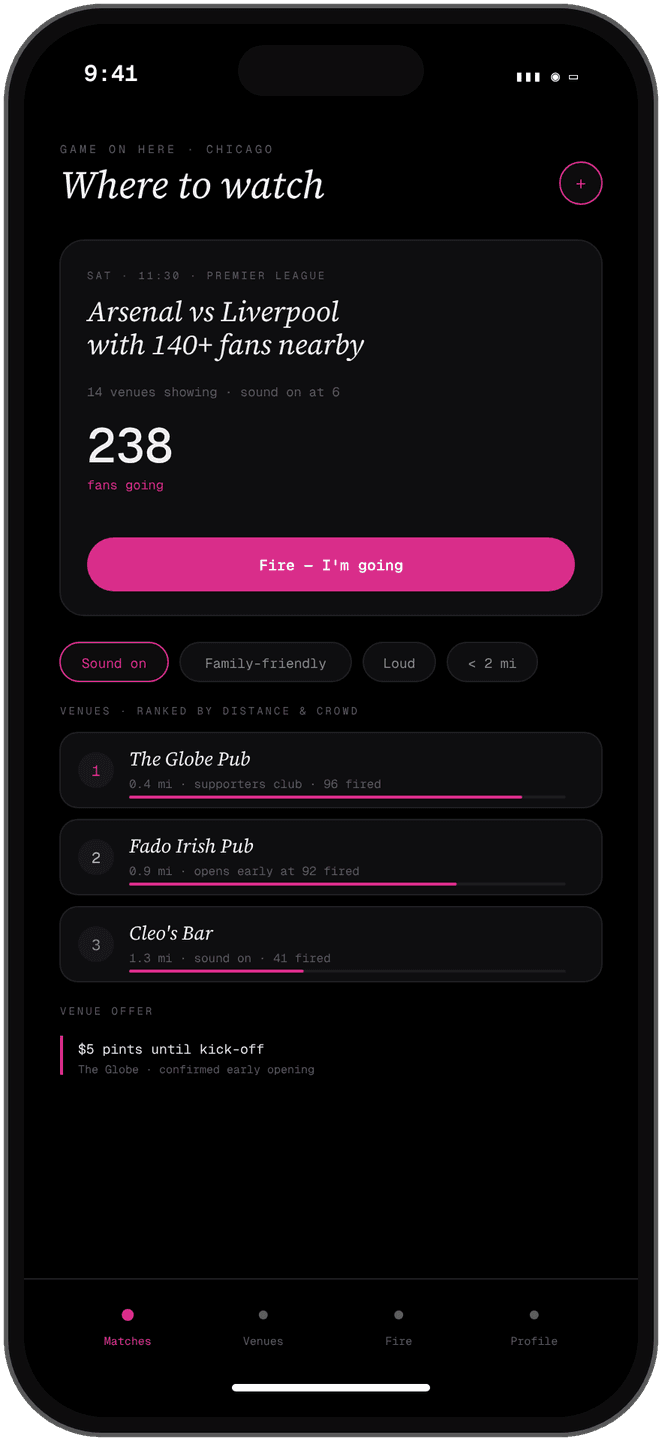


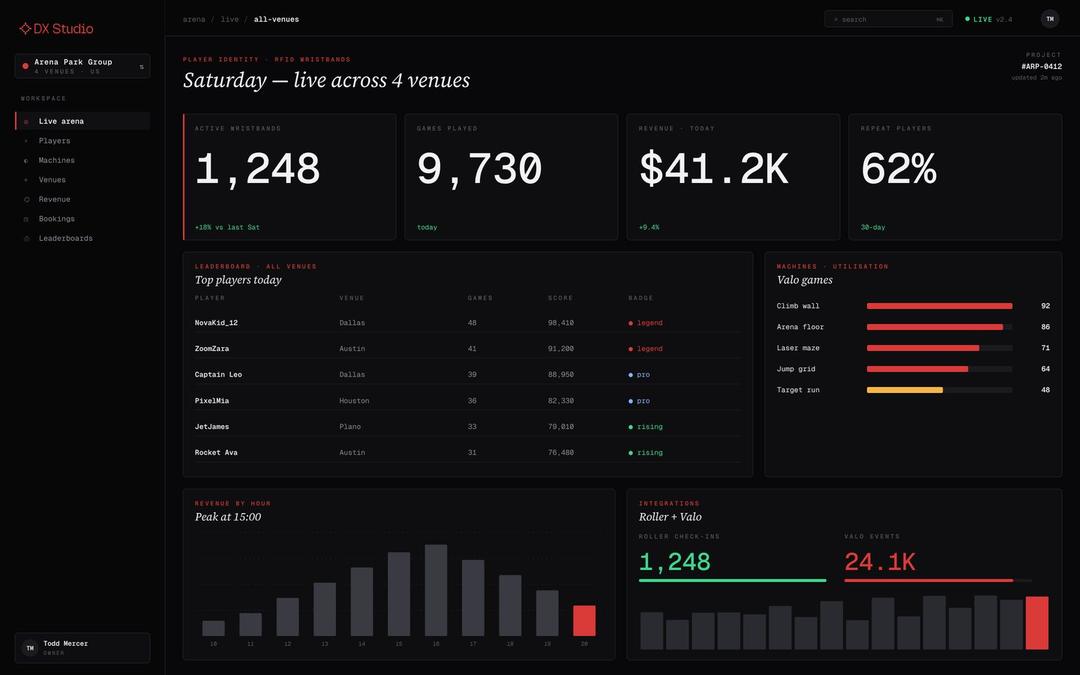

RFID Wristband Player Profiles & Analytics for Family Entertainment Centres
Media, Sports & Gaming · Confidential client
RFID/NFC wristbands link each visitor's game scores to a player profile. Players see their history, rankings and achievements on a phone, and managers see branch, machine and revenue analytics in one dashboard.