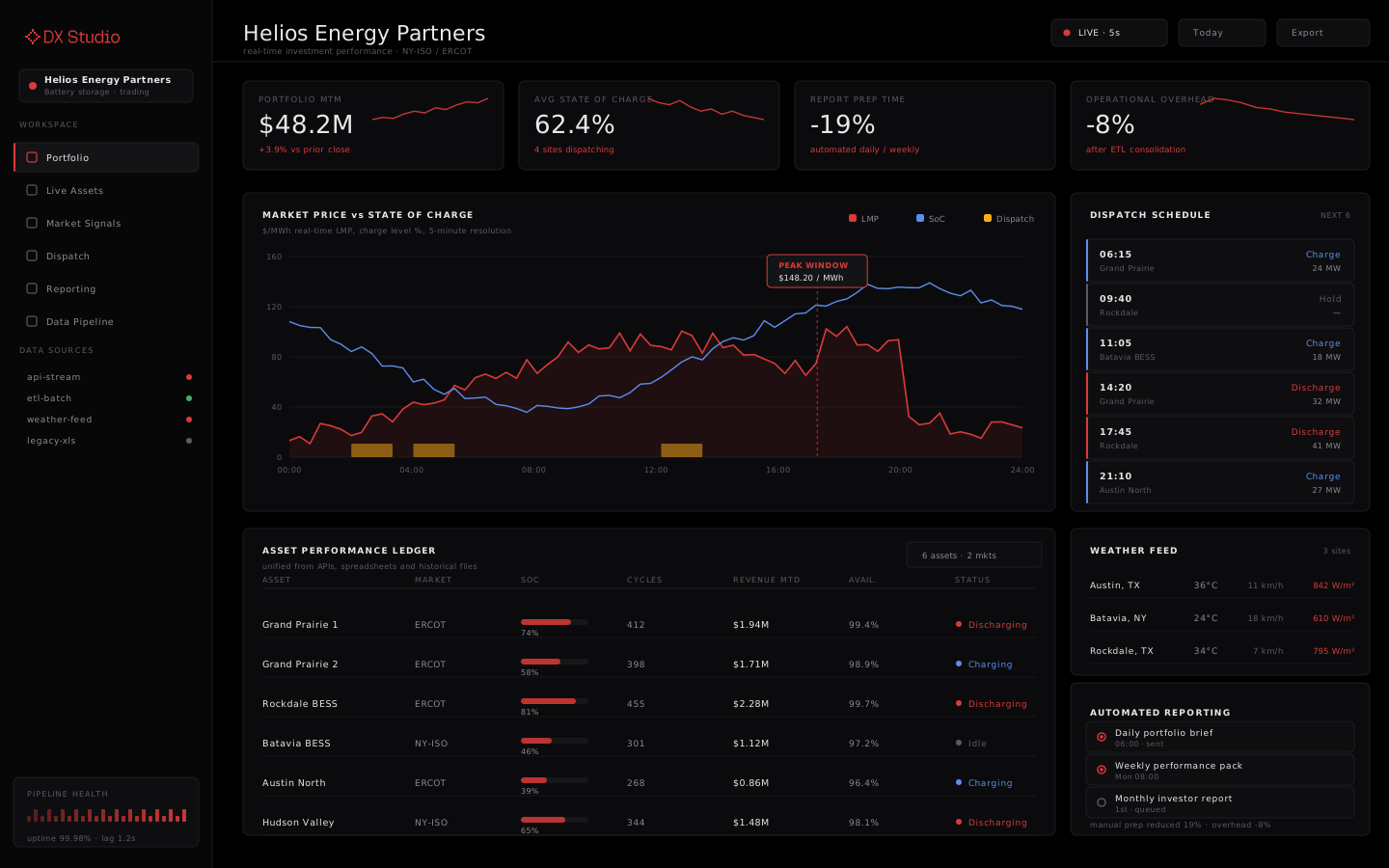
Helping a UK-based global commodities trading firm unify energy market, asset, and operational data into a real-time investment performance dashboard built for faster portfolio decisions and more accurate reporting.
The client is a next-generation energy merchant and asset investor focused on battery storage and energy trading strategies. Operating across key markets including New York and Austin, the company works in one of the most volatile and opportunity-rich areas of the energy sector, where real-time visibility, accurate forecasting, and fast execution directly influence investment performance.
As the business scaled, its data infrastructure struggled to keep pace with operational complexity. Key information such as state of charge, real-time dispatch instructions, market pricing, weather feeds, and historical asset data was spread across APIs, Excel files, and internal documents. This made it difficult for teams to maintain one reliable view of portfolio performance.
The challenge was fragmented energy data and slow investment visibility.
The company already had access to valuable operational and market data, but that data was not connected in a way that supported live decision-making. Asset status, pricing signals, dispatch schedules, and weather inputs all lived in separate systems, forcing teams to manually consolidate information before they could understand performance.
This slowed reporting cycles, created inconsistencies, and limited the team’s ability to react quickly to market movement. For an energy trading and asset investment business, delays in interpreting live conditions could affect both operational efficiency and portfolio-level outcomes.
The goal was to build an investment-grade dashboard that could centralize internal and external data, support live operations, reduce manual reporting, and create a scalable foundation for future asset types and data sources.
We built a real-time dashboard layer for energy market and asset intelligence.
The solution started with a custom ETL pipeline that aggregated data from spreadsheets, APIs, and historical files, then standardized everything into a unified and reliable structure. This created one trusted data foundation for operations, analytics, and stakeholder reporting.
On top of this foundation, we built a browser-based dashboard with real-time streaming widgets for battery asset KPIs, including market price, state of charge, dispatch schedules, and weather data. The interface was designed to be auto-refreshing, interactive, and practical for teams monitoring performance throughout the day.
The platform also introduced automated reporting and scalable infrastructure.
A dedicated reporting module was implemented to generate stakeholder-ready reports on a daily, weekly, and monthly basis. This reduced manual preparation time while improving consistency, accuracy, and timeliness across recurring reporting workflows.
The system was designed as a cloud-native, modular architecture so new assets, geographies, and analytics capabilities could be added without requiring a full rebuild. This made the platform not only useful for current operations, but also ready to support future portfolio expansion.
Unified spreadsheets, APIs, historical files, market data, asset data, and weather feeds
Built live dashboard widgets for market price, state of charge, dispatch schedules, and weather data
Automated daily, weekly, and monthly stakeholder reporting
Reduced manual reporting time by 19%
Decreased operational overhead by 8%
Created a scalable foundation for future asset onboarding and geographic expansion
The result was a faster and more reliable investment performance operation.
The final dashboard helped the client move from fragmented workflows to a live operating view of energy market and asset performance. Teams could monitor portfolio conditions, understand market signals, and prepare reports with greater speed and confidence.
By centralizing asset, market, and weather data into one real-time platform, the system improved trading visibility, reduced operational friction, and gave the company a stronger foundation for scalable energy investment decisions.
The value of the dashboard was not only in showing live energy data, but in helping teams act on market, asset, and performance signals before those signals lost their value.
More works.

" height="56.88889185587561px" id="STzxULXmg" transform="translate(3.556 3.556)" width="56.8888918558755px"/></g></svg>)
Operational Efficiency Enhancement
Operational Efficiency Enhancement Dashboard
Helping a US-based, youth development nonprofit organization, streamline reporting and enhance operational efficiency with real-time dashboards that automate workflows and improve decision-making.
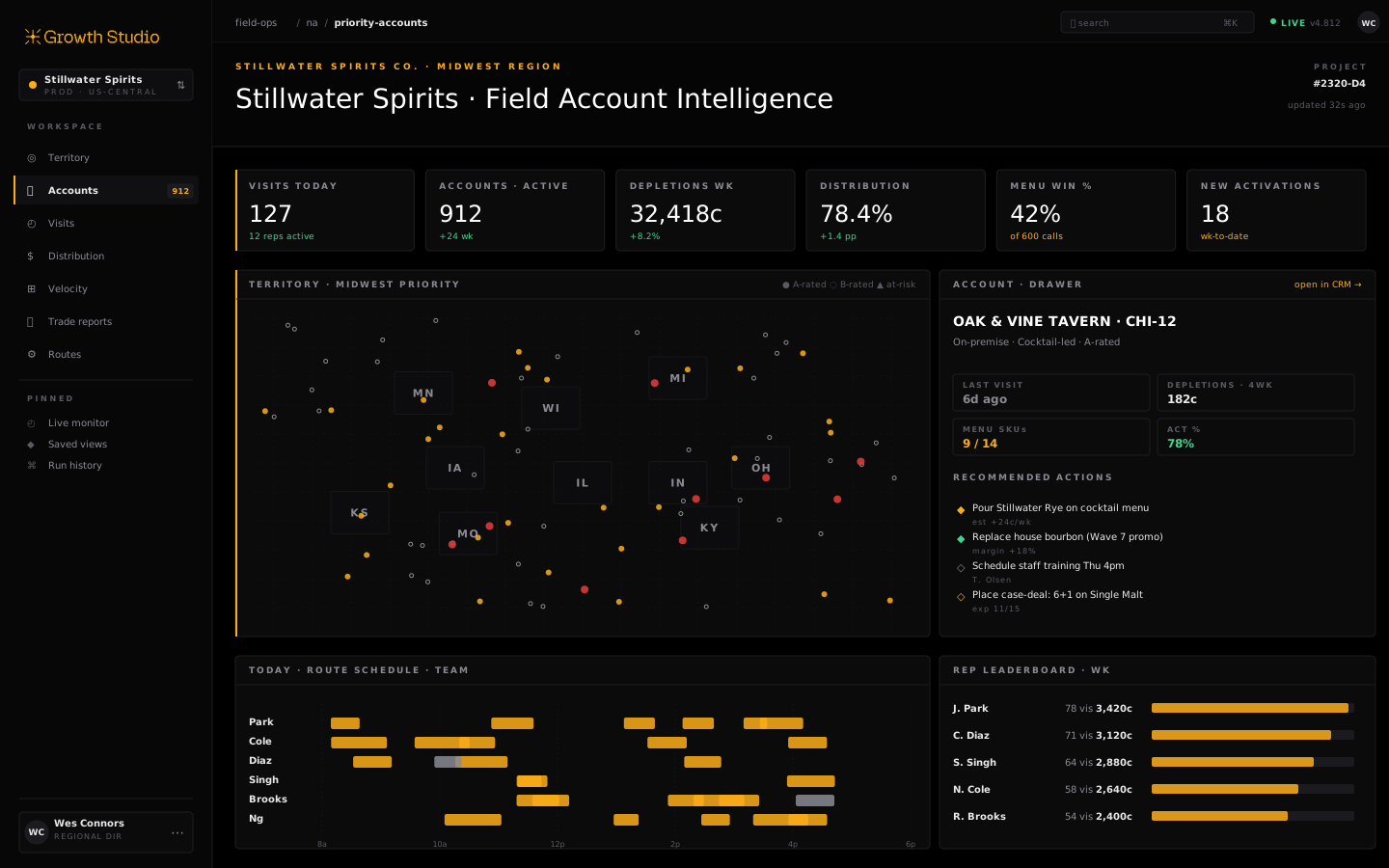
Interactive Sales Intelligence
Interactive Sales Intelligence Dashboard
Transforming a US-Based, Global Premium Spirits Company’s sales operations with precision targeting and mobile-first insights. By combining internal data with real-world restaurant insight.
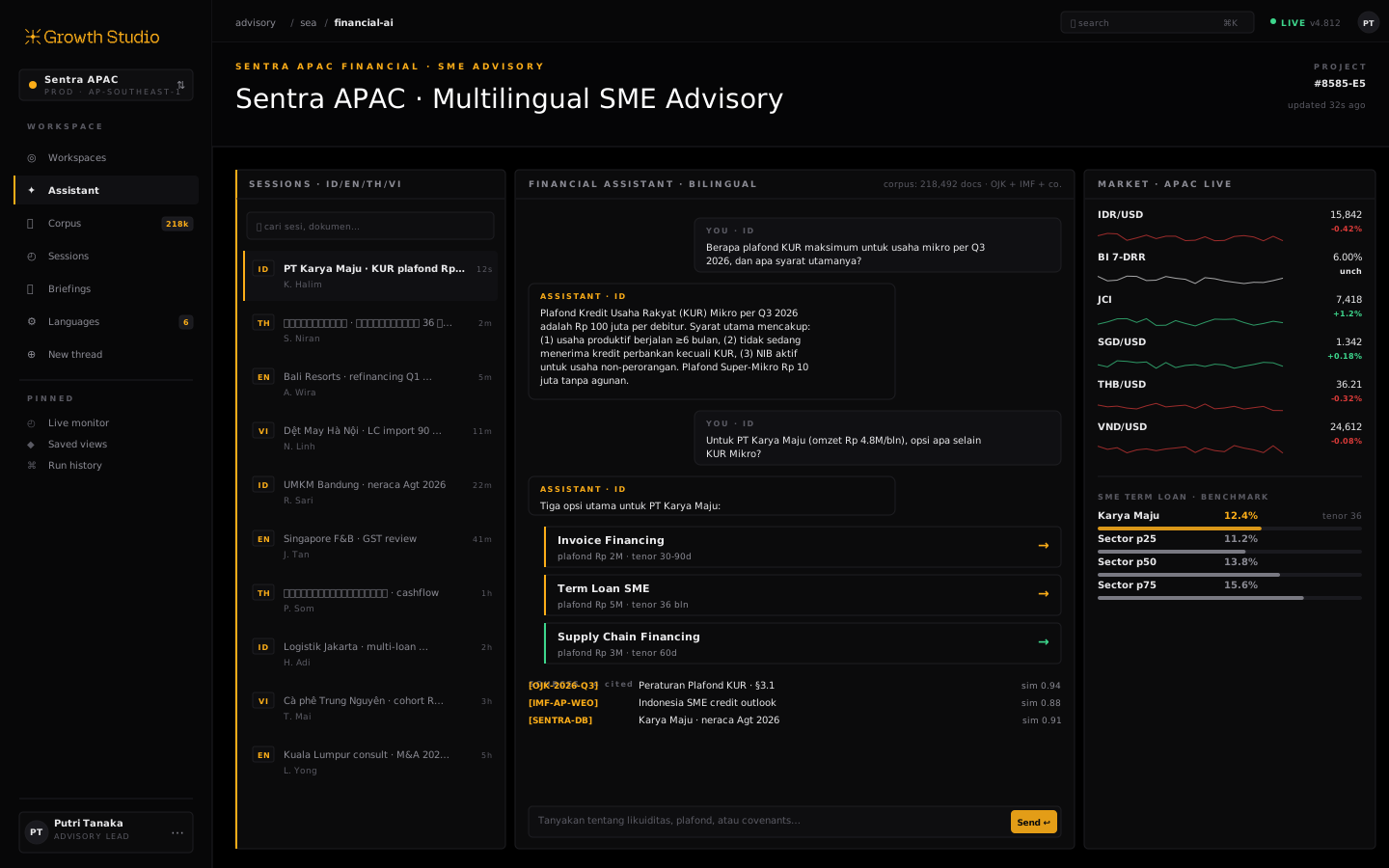
AI-Driven Financial Insights Platform for SMEs
AI-Driven Financial Insights Platform for SMEs
A multilingual, AI-powered financial intelligence platform that centralizes data, enables instant insights, and empowers Southeast Asian SMEs to make confident, data-driven decisions.