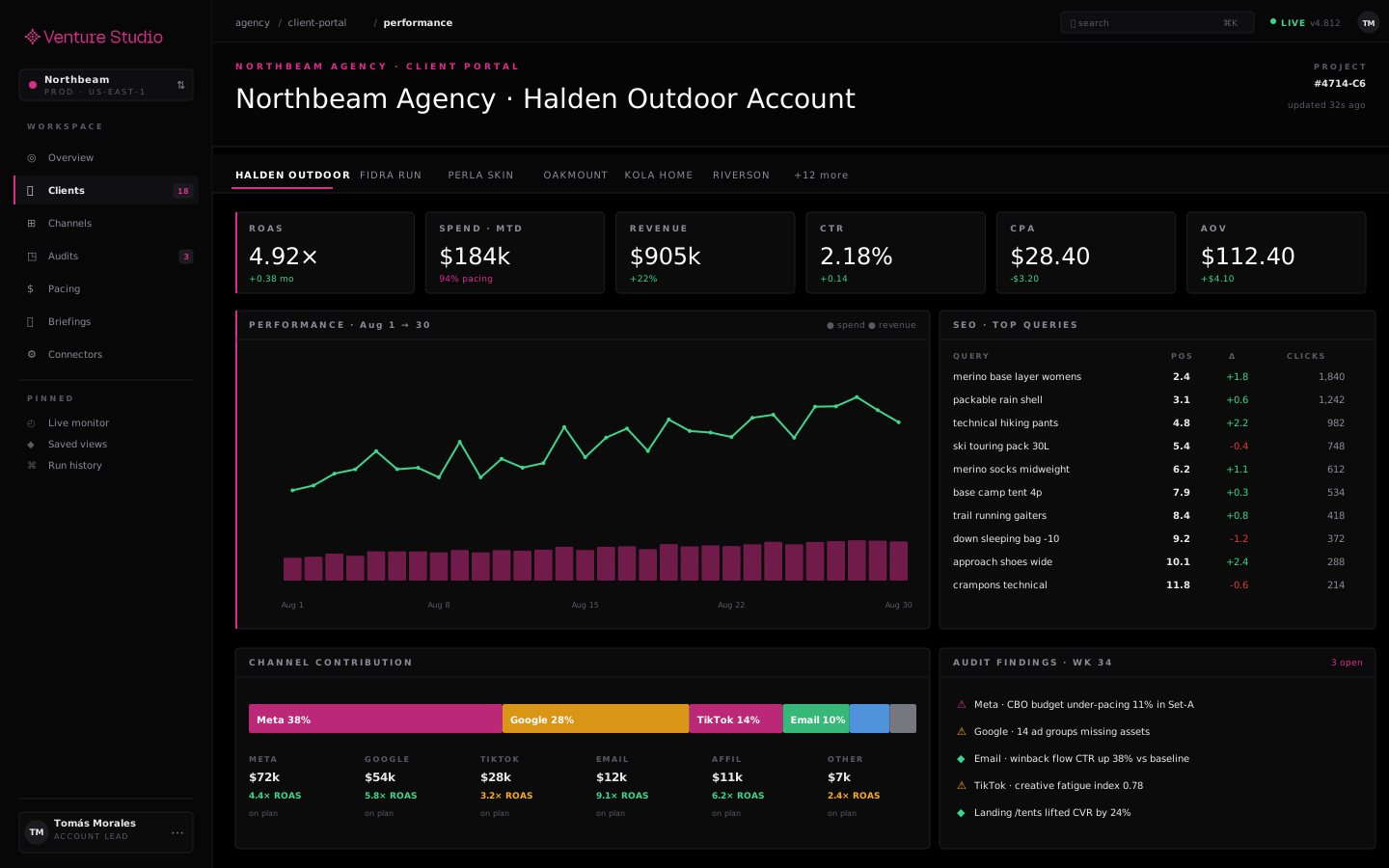
Digital Marketing Analytics Dashboard
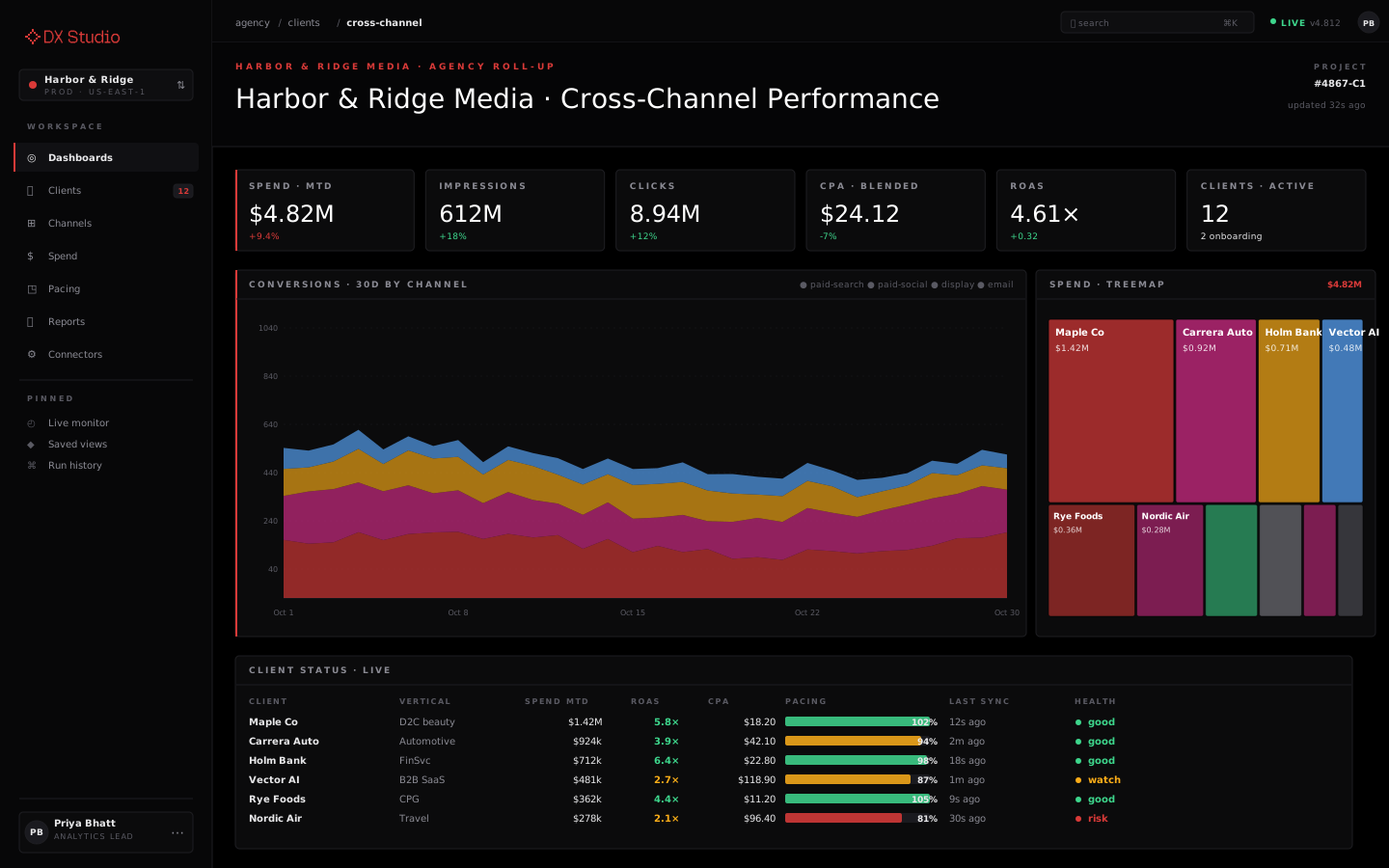
Helping a US-based global digital marketing agency simplify and scale client reporting by unifying paid media, SEO, and campaign performance data into a single real-time analytics portal.
The client is a performance-driven marketing agency supporting high-growth brands through paid media, SEO, and content strategies. As their client roster expanded, reporting became harder to manage across accounts, platforms, and stakeholder expectations. Campaign data lived across Google, Meta, LinkedIn, and other marketing systems, each with its own format, metric definitions, and reporting cadence.
This created friction for both internal account managers and external clients. Account managers spent hours assembling reports manually, while clients had to interpret disconnected dashboards, static PDFs, and email updates to understand how their campaigns were performing.
The challenge was not a lack of marketing data, but the absence of one clear reporting experience.
Clients were receiving campaign insights from multiple sources, but the information was fragmented and difficult to compare. Channel-level performance, campaign trends, spend efficiency, and conversion indicators were often separated across different tools.
This slowed down decision-making and created unnecessary reporting dependency. Clients had to ask account managers for updates, account managers had to rebuild recurring reports, and leadership had limited visibility into whether reporting was actually helping clients act faster.
The goal was to create a centralized reporting portal that could bring campaign data together, simplify interpretation, and give clients always-on access to performance insights without relying on manual updates.
We built a branded Looker Studio portal for unified campaign reporting.
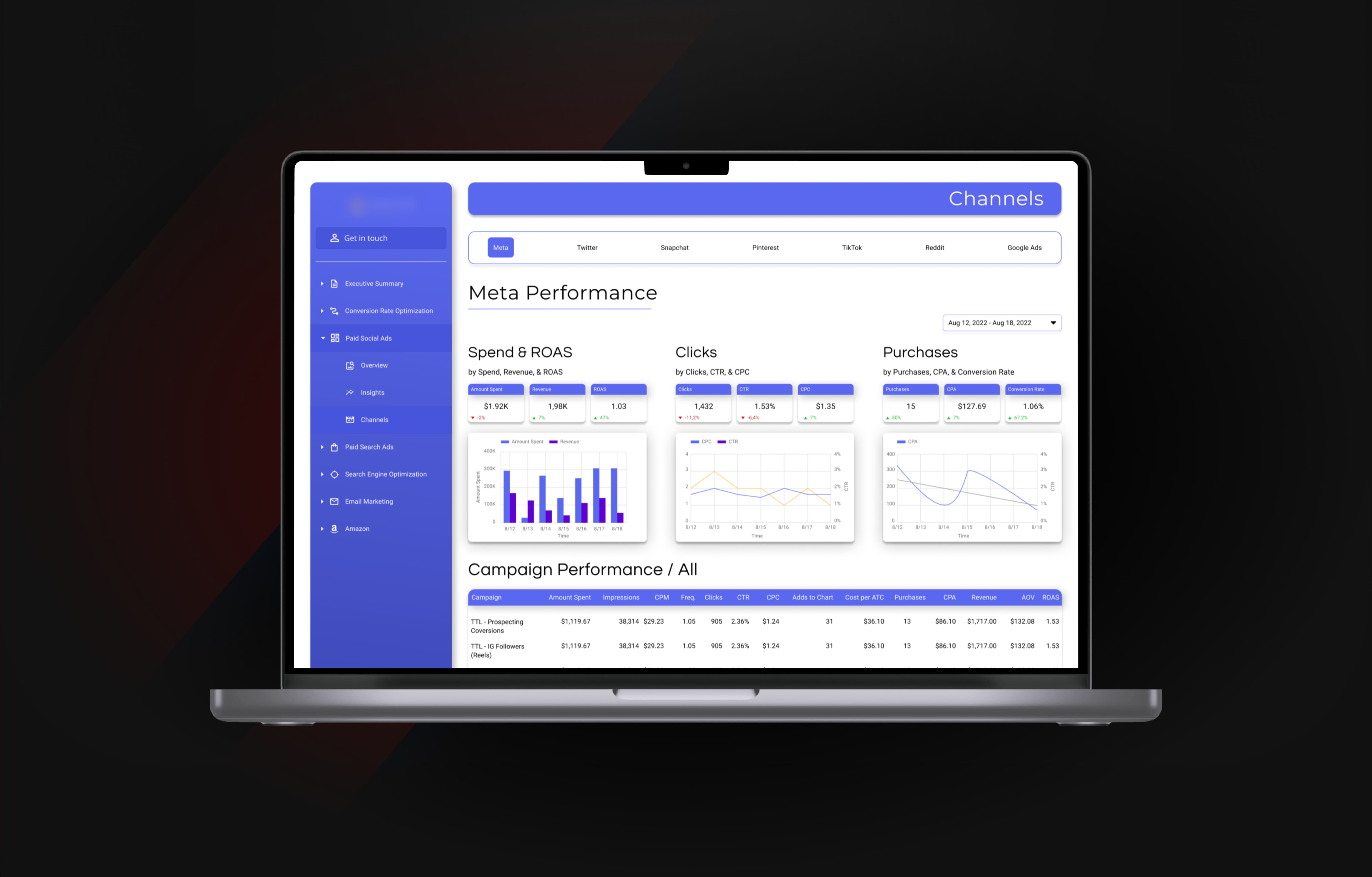
The solution was developed as a centralized Looker Studio reporting hub, integrating active ad accounts and marketing performance data into one intuitive platform. Instead of asking clients to move between Google, Meta, LinkedIn, and separate reporting exports, the portal gave them a single place to understand campaign performance.
Custom dashboards were designed to support both high-level summaries and granular exploration. Clients could filter results by date, channel, campaign, and performance area, making it easier to answer specific questions without needing a new custom report each time.
The dashboard focused on clarity, self-service access, and faster campaign decisions.
Raw campaign metrics were translated into clean, digestible visualizations that marketing managers, founders, and client stakeholders could understand at a glance. The visual language was kept simple and consistent so users could quickly see what was improving, what needed attention, and where budget decisions might be required.
The portal was also built for self-service, always-on access across devices. Clients could check campaign performance whenever they needed, reducing dependence on static PDFs, email threads, or recurring reporting meetings.
Centralized Google, Meta, LinkedIn, and campaign data into one Looker Studio portal
Built real-time, filterable dashboards for channel, date, and campaign-level analysis
Simplified campaign reporting with clean visual language and client-friendly views
Reduced weekly reporting hours by 40%
Saved account managers an average of 8 hours per week
Increased client portal engagement by 4×
Enabled 17% faster client decision-making
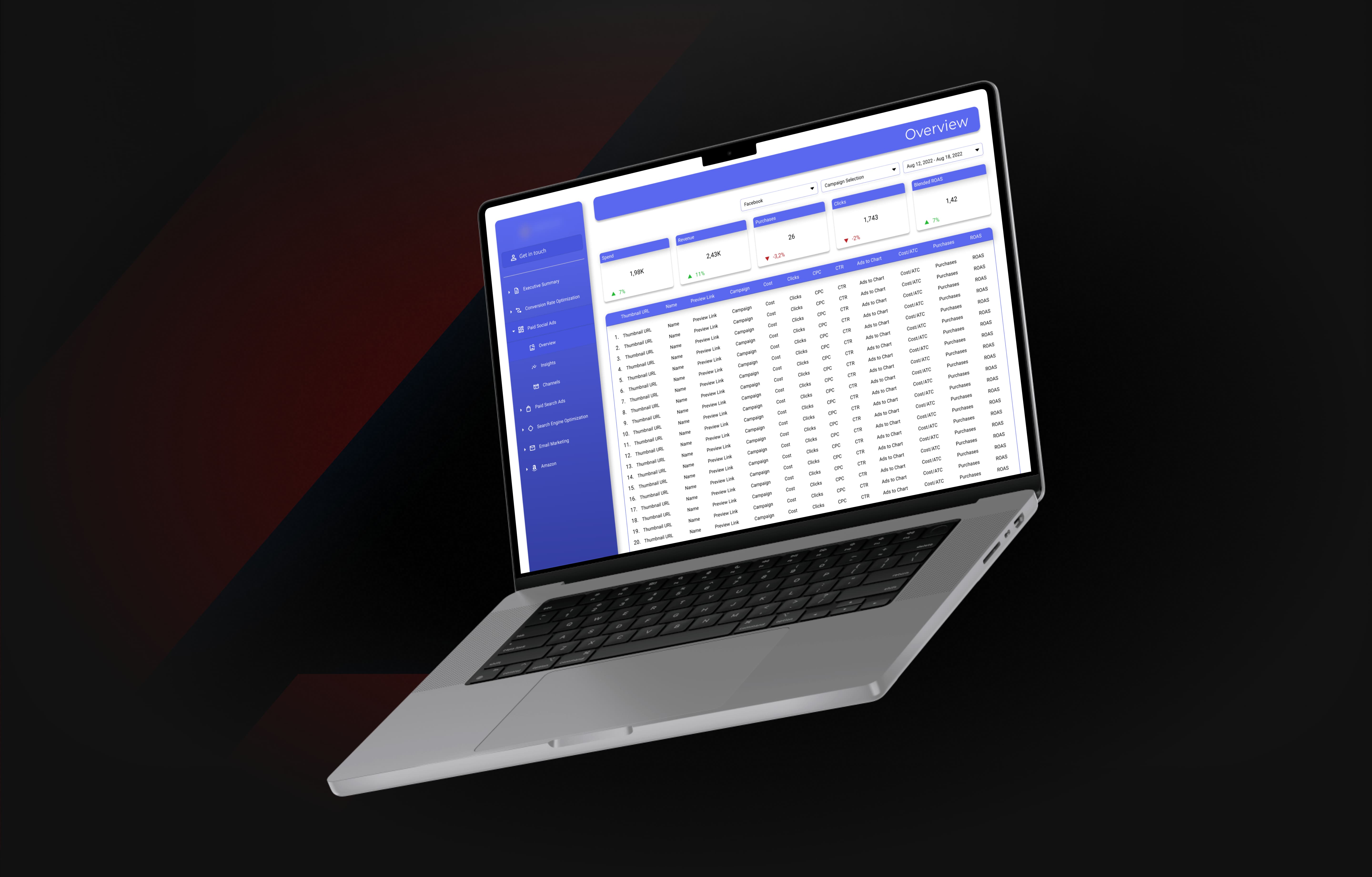
The result was a more scalable and premium client reporting experience.
The final dashboard helped the agency move from manual reporting workflows to a real-time analytics portal clients could use independently. Account managers gained more time for strategy and optimization, while clients gained clearer visibility into campaign performance and faster access to the insights they needed.
By unifying fragmented marketing data and making reporting easier to understand, the platform improved client confidence, reduced support queries, and created a more scalable foundation for agency growth.
The value of the dashboard was not only in reporting marketing performance, but in giving clients a clearer, faster, and more self-service way to act on campaign data.
More works.
" height="56.88933297932206px" id="iGKvyhO65" transform="translate(3.555 3.555)" width="56.88888905956139px"/></g></svg>)
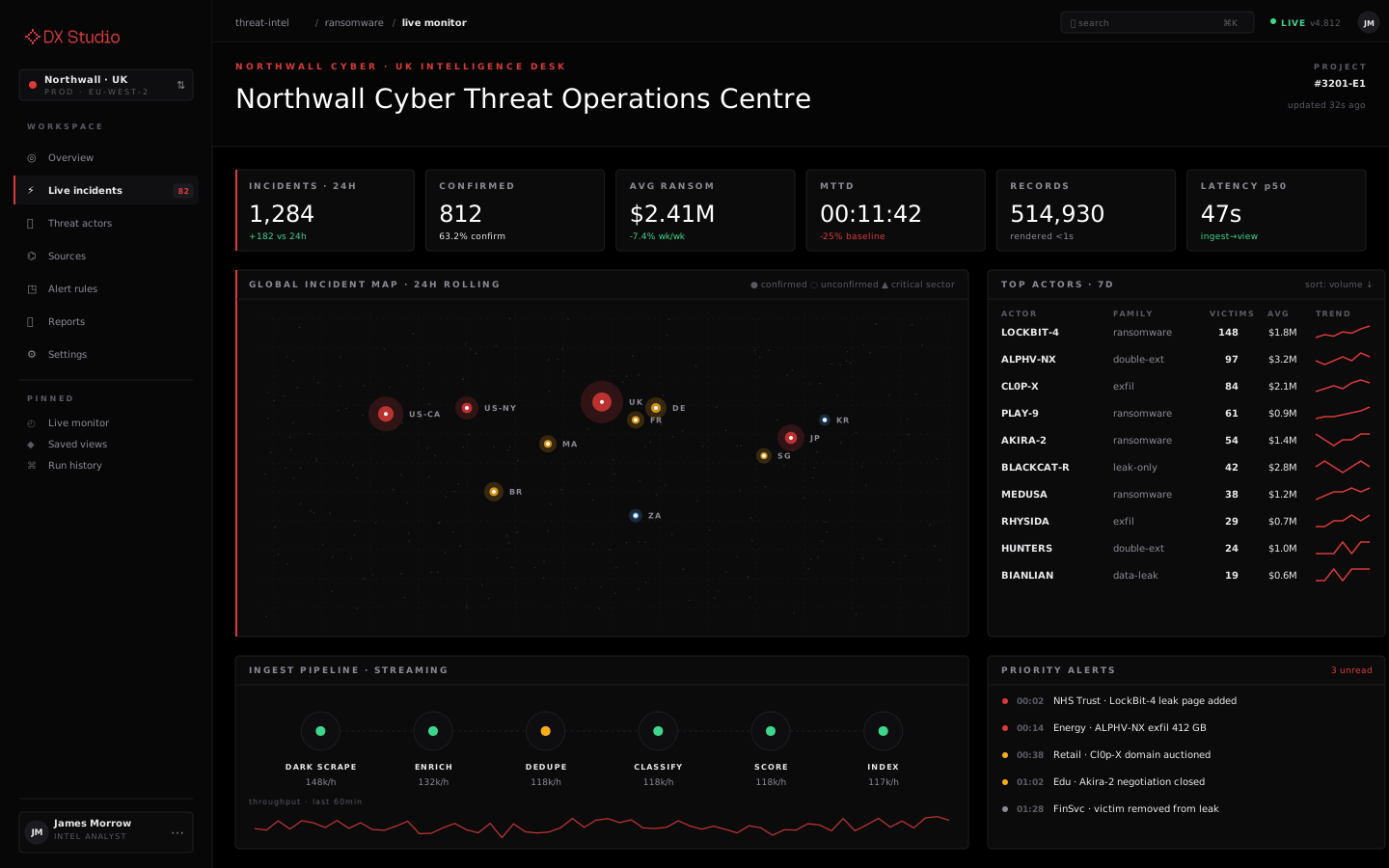
Real-Time Ransomware Monitoring
Real-Time Ransomware Monitoring Dashboard
Helping the UK-based cybersecurity research organization deliver continuous, high-performance ransomware insights that accelerate threat response and strengthen situational awareness.
Marketing Data Dashboard
Marketing Data Dashboard for Scalable Growth
A centralized Looker Studio dashboard that consolidates multi-channel marketing data, automates reporting, and enhances real-time decision-making for a global professional services firm.
Digital Marketing Analytics
Digital Marketing Analytics Dashboard
Helping a US-based Global Digital Marketing Agency simplify and scale client reporting by unifying marketing performance data into a single, real-time analytics platform.