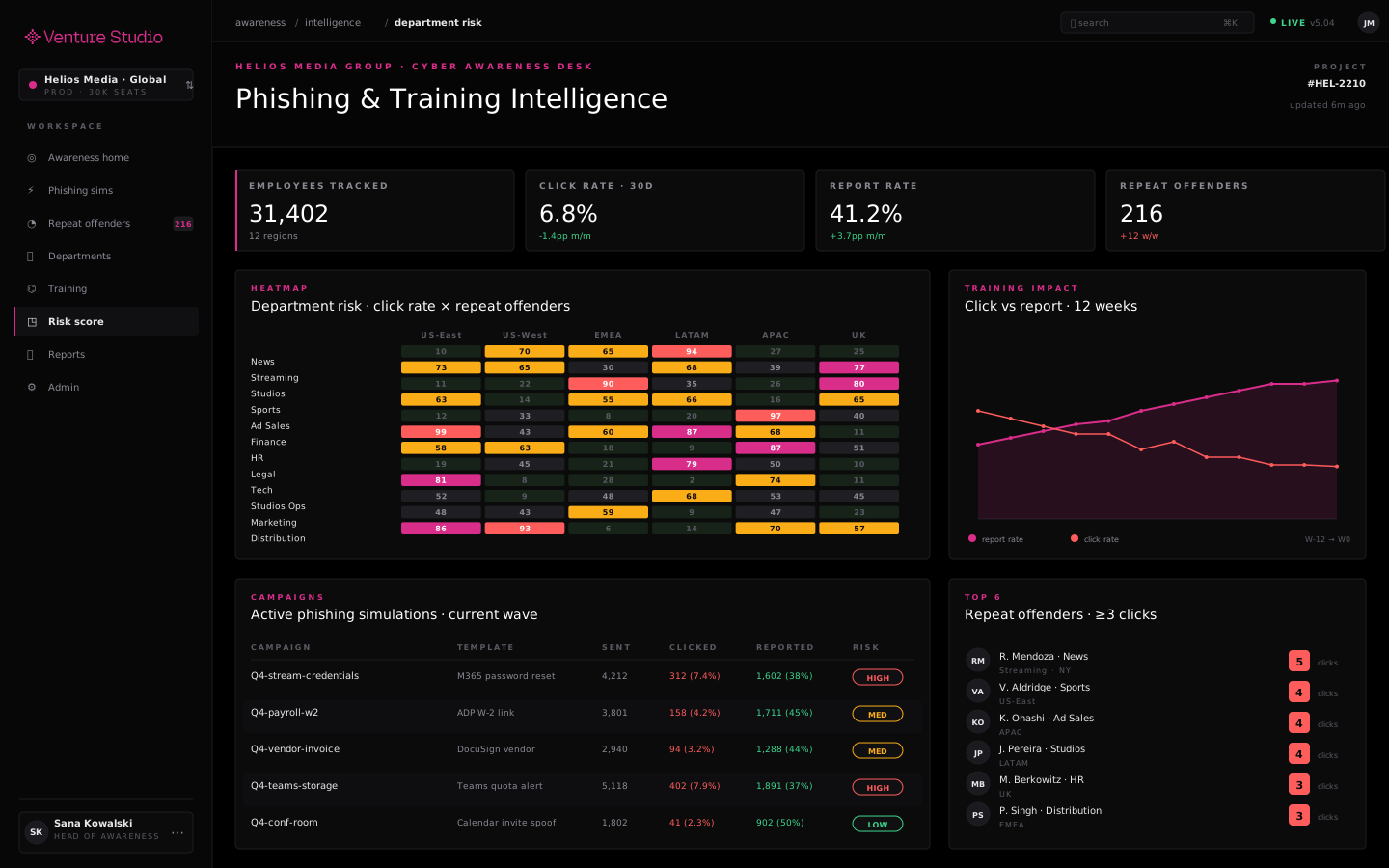
Helping a global media and entertainment company turn fragmented phishing and training data into a real-time cybersecurity awareness intelligence dashboard.
The client is one of the world’s largest media and entertainment companies, operating across television networks, streaming platforms, and film studios. With a distributed workforce of more than 30,000 employees across multiple regions, cybersecurity awareness was not only a compliance priority, but also a critical part of reducing human-driven security risk.
The Cybersecurity Awareness team was responsible for improving employee resilience against phishing, social engineering, and risky digital behavior. To do that effectively, they needed a clearer way to understand how different teams, departments, and regions were performing over time.
The challenge was not running more training, but understanding where awareness risk was actually concentrated.
Phishing simulation and training data were spread across multiple systems, including Proofpoint, XSOAR, Splunk, and Microsoft Teams. Each platform captured a different part of the awareness journey, but there was no unified view of user behavior, engagement, or risk.
As a result, the team relied heavily on manual Excel reporting to track click rates, report rates, participation levels, repeat offenders, and departmental risk scores. This made analysis slower, created reporting inconsistencies, and delayed action against high-risk user segments.
The cybersecurity team needed an automated intelligence layer that could centralize awareness data, refresh continuously, and help stakeholders move from reactive reporting to proactive risk reduction.
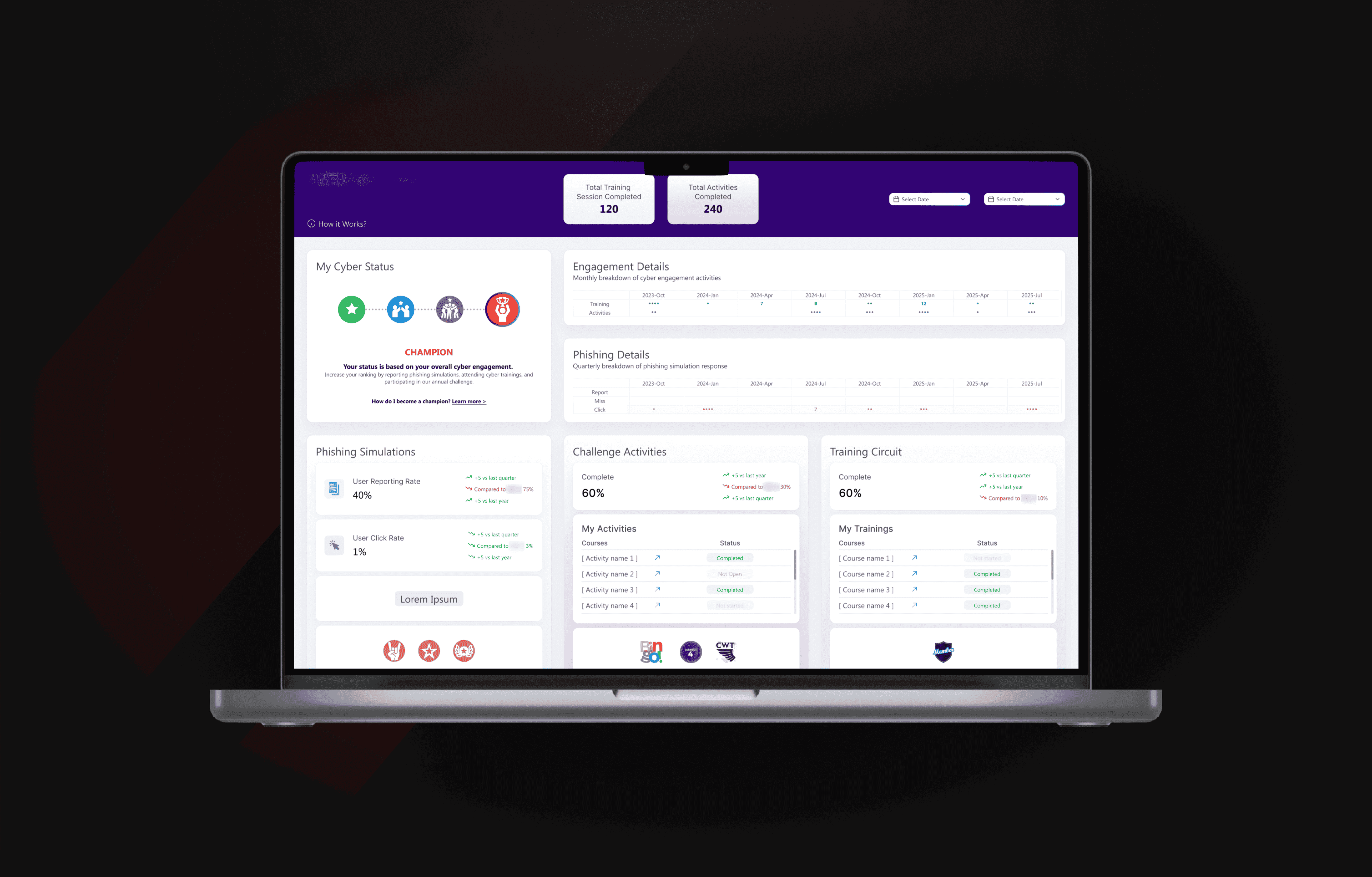
We built a Power BI intelligence dashboard connected to the company’s core cybersecurity and communication systems.
The solution started with a multi-source data architecture that integrated Proofpoint for phishing simulations, XSOAR for security orchestration, Splunk for incident monitoring, and Microsoft Teams for training communications. These sources were consolidated into a structured reporting layer designed for reliable dashboarding and scalable analysis.
On top of this data foundation, we developed a dynamic Power BI dashboard that visualized key awareness metrics such as phishing click rates, employee report rates, repeat offender patterns, training participation, and department-level risk scores.
This gave the Cybersecurity Awareness team continuous visibility into how employees were responding to phishing simulations and where additional intervention was needed.
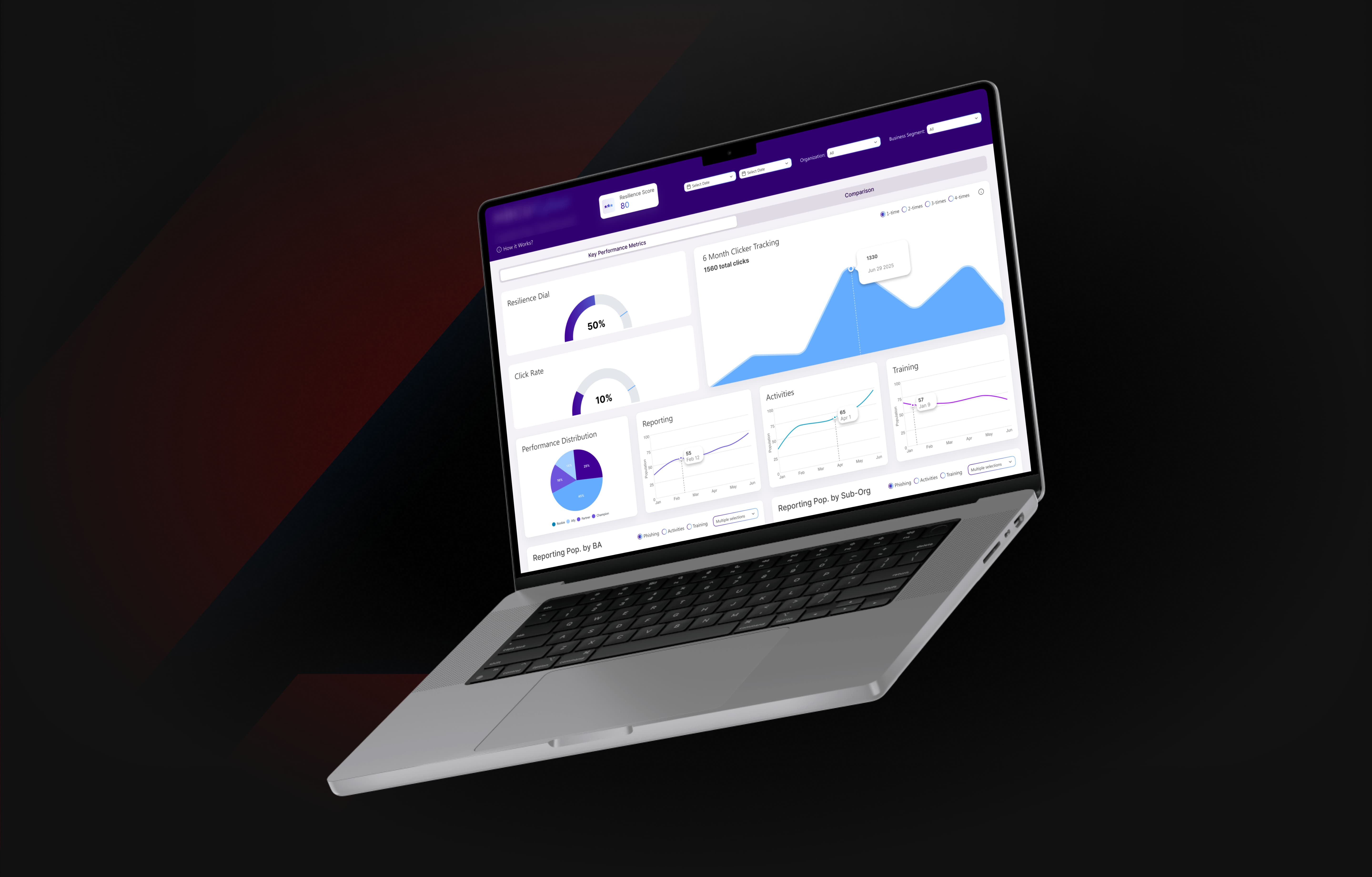
The platform made security awareness measurable, segmented, and easier to act on.
Automated refresh cycles and validation workflows replaced manual spreadsheet consolidation, improving report reliability and reducing repetitive analyst work. Instead of waiting for manually prepared reports, teams could review updated awareness performance within hours.
The dashboard also included role-based views for executives, security analysts, and department heads. Executives could monitor overall risk trends, analysts could investigate behavioral patterns, and department leaders could understand awareness performance within their own teams.
Threshold-based alerts were also configured to flag unusual phishing behavior, low training completion, or high-risk segments that required targeted follow-up.
Integrated Proofpoint, XSOAR, Splunk, and Microsoft Teams into one Power BI reporting layer
Visualized click rates, report rates, repeat offenders, training participation, and departmental risk scores
Reduced manual reporting time by 45%
Made security training result analysis 4× faster
Enabled segmented visibility for executives, analysts, and department heads
Improved identification of high-risk departments and low-engagement user groups
The result was a more proactive cybersecurity awareness operation.
The final dashboard helped the client move from fragmented, manual awareness reporting to a centralized intelligence platform. Security teams could identify risky behavior faster, understand engagement patterns more clearly, and launch targeted awareness campaigns with better timing and precision.
By unifying cybersecurity, training, and communication data, the platform gave leadership a transparent view of awareness performance and helped the organization continuously improve its human-risk management strategy.
The value of the dashboard was not only in tracking phishing metrics, but in helping the cybersecurity team understand where human risk existed and how to reduce it faster.
More works.

" height="56.88889185587561px" id="STzxULXmg" transform="translate(3.556 3.556)" width="56.8888918558755px"/></g></svg>)
Operational Efficiency Enhancement
Operational Efficiency Enhancement Dashboard
Helping a US-based, youth development nonprofit organization, streamline reporting and enhance operational efficiency with real-time dashboards that automate workflows and improve decision-making.
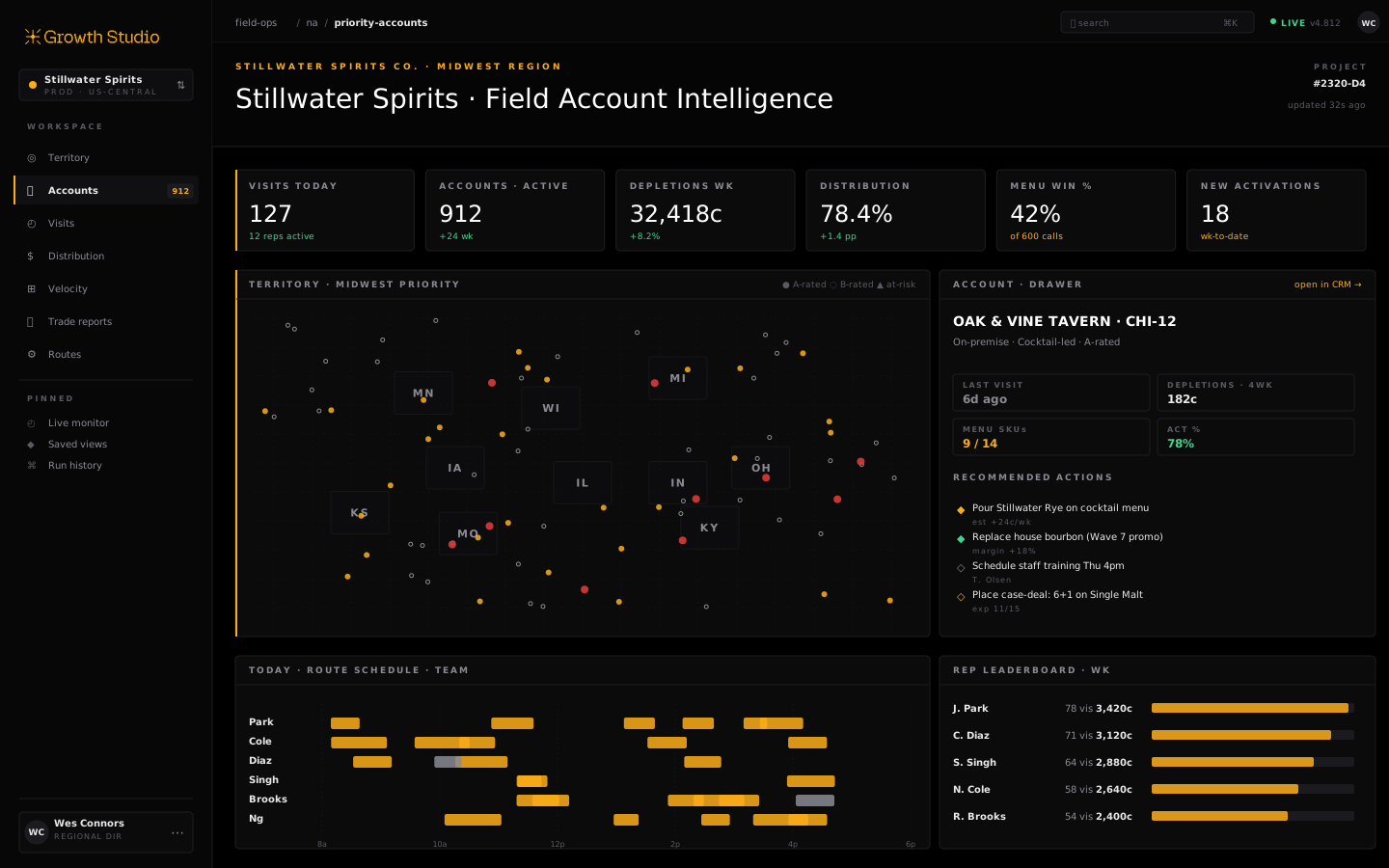
Interactive Sales Intelligence
Interactive Sales Intelligence Dashboard
Transforming a US-Based, Global Premium Spirits Company’s sales operations with precision targeting and mobile-first insights. By combining internal data with real-world restaurant insight.
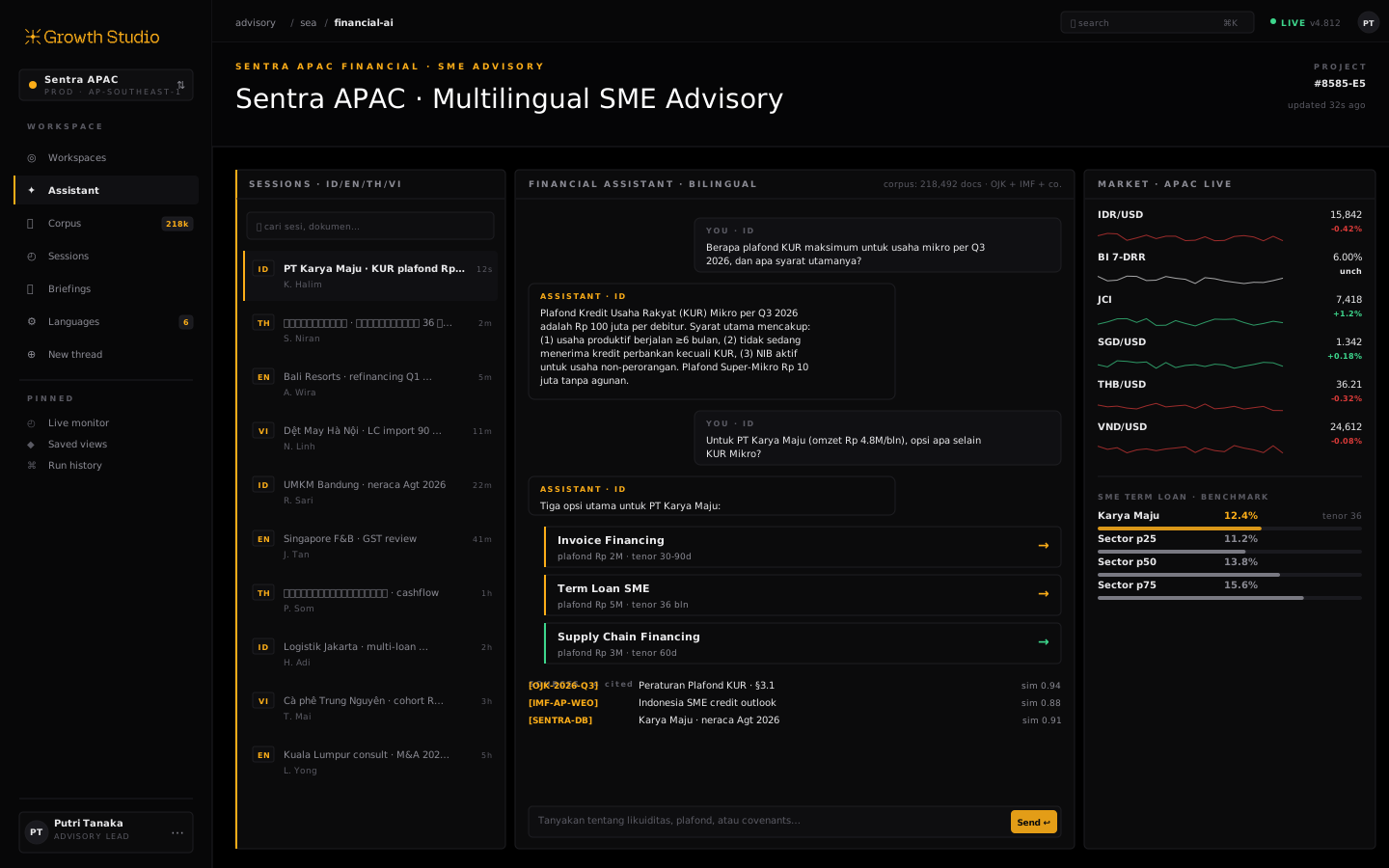
AI-Driven Financial Insights Platform for SMEs
AI-Driven Financial Insights Platform for SMEs
A multilingual, AI-powered financial intelligence platform that centralizes data, enables instant insights, and empowers Southeast Asian SMEs to make confident, data-driven decisions.