
Helping a community-focused NGO in Missoula, Montana move from Excel-based project tracking to an integrated ClickUp workspace built for better visibility, coordination, and reporting accuracy.
The client is a renowned NGO managing multiple community programs, donor-funded initiatives, volunteers, and local partner relationships. As operations expanded, the organization’s manual workflow started to create friction across departments. Project updates lived in different Excel files, reporting formats varied from team to team, and leadership had limited visibility into program progress without manually checking multiple sources.
The organization needed a more structured digital system that could unify project planning, task ownership, reporting, and communication in one place.

The challenge was not only outdated tools, but the operational complexity created by fragmented work.
The NGO’s reliance on static Excel files led to duplicated data, version mismatches, and inconsistent reporting. Program managers did not have a centralized view of ongoing initiatives, which slowed down decisions and created redundant administrative work.
Coordination also became harder as more stakeholders were involved. Donors, volunteers, internal teams, and local partners all needed different levels of visibility, but the existing process made it difficult to keep everyone aligned without creating extra manual work for staff.
The goal was to replace fragmented spreadsheet processes with a ClickUp-based management environment that could support project planning, reporting, and communication across the organization.
We designed a modular ClickUp workspace around the NGO’s real program structure.
The solution started with a ClickUp workspace architecture that reflected the organization’s program hierarchy. Spaces, folders, lists, dashboards, Gantt views, and reusable templates were structured around how the NGO actually managed initiatives, rather than forcing the team into a generic project management setup.
Existing Excel data was migrated into structured ClickUp lists, with clear fields, ownership logic, deadlines, and reporting views. This created one shared operating layer for program managers, leadership, and support teams.
The system introduced automation, rollout support, and long-term workflow consistency.
Recurring workflows such as weekly updates, donor summaries, team reminders, and project status reporting were automated to reduce repetitive administrative work. Instead of rebuilding reports manually, teams could rely on standardized dashboards and templates to keep information updated and easier to interpret.
The rollout began with a proof of concept for key program managers before expanding across the organization. This helped validate the setup, gather feedback early, and reduce disruption during the transition. Staff onboarding sessions were also conducted to build user confidence and support adoption beyond the initial implementation.
Migrated Excel-based project data into structured ClickUp lists
Built a modular workspace with dashboards, Gantt charts, and reusable templates
Automated weekly updates, donor reports, reminders, and recurring admin workflows
Reduced administrative workload by 30%
Improved internal coordination speed by 45%
Increased reporting transparency by 2×
The result was a more transparent and efficient operating system for the NGO.
The final ClickUp environment helped the organization replace outdated manual workflows with a connected project management system. Teams could track initiatives more clearly, coordinate across departments faster, and generate reporting outputs with less effort.
By centralizing project visibility and automating recurring processes, the NGO gained a scalable foundation for managing programs with more precision, accountability, and focus on its core mission.
The value of the integration was not only in moving work from Excel to ClickUp, but in giving the team a clearer operating rhythm for collaboration, reporting, and program delivery.
More works.

" height="56.88889185587561px" id="STzxULXmg" transform="translate(3.556 3.556)" width="56.8888918558755px"/></g></svg>)
Operational Efficiency Enhancement
Operational Efficiency Enhancement Dashboard
Helping a US-based, youth development nonprofit organization, streamline reporting and enhance operational efficiency with real-time dashboards that automate workflows and improve decision-making.
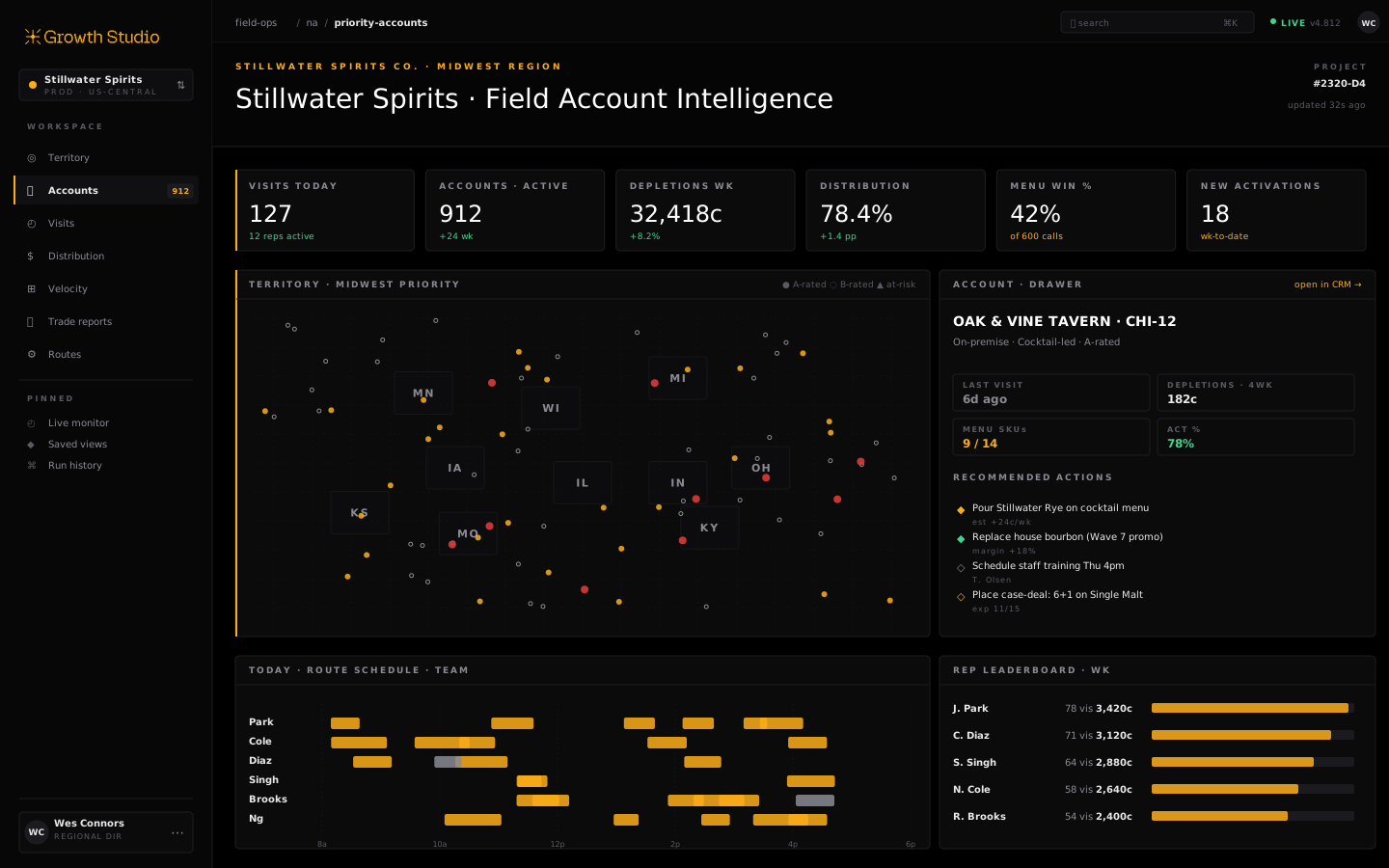
Interactive Sales Intelligence
Interactive Sales Intelligence Dashboard
Transforming a US-Based, Global Premium Spirits Company’s sales operations with precision targeting and mobile-first insights. By combining internal data with real-world restaurant insight.
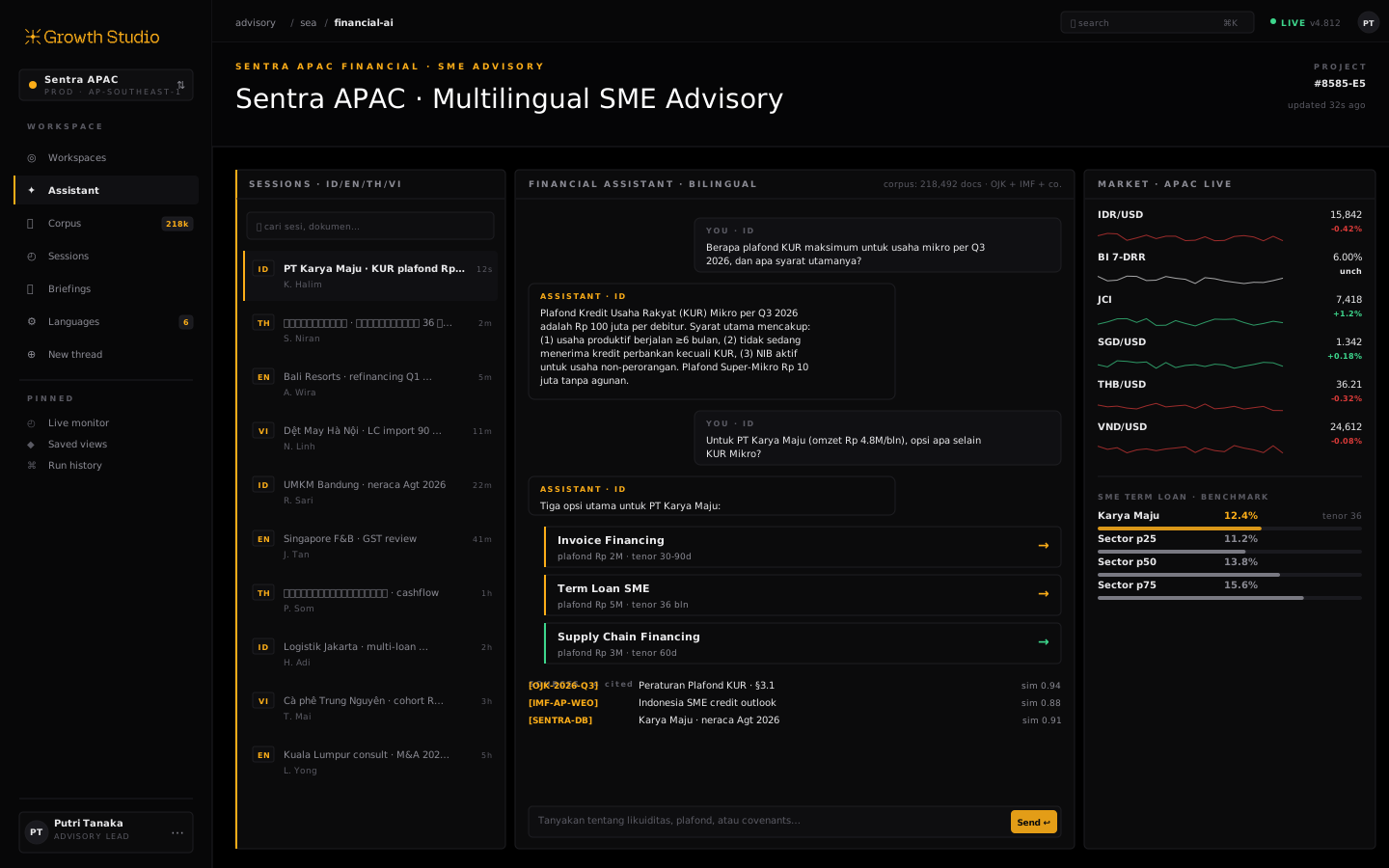
AI-Driven Financial Insights Platform for SMEs
AI-Driven Financial Insights Platform for SMEs
A multilingual, AI-powered financial intelligence platform that centralizes data, enables instant insights, and empowers Southeast Asian SMEs to make confident, data-driven decisions.