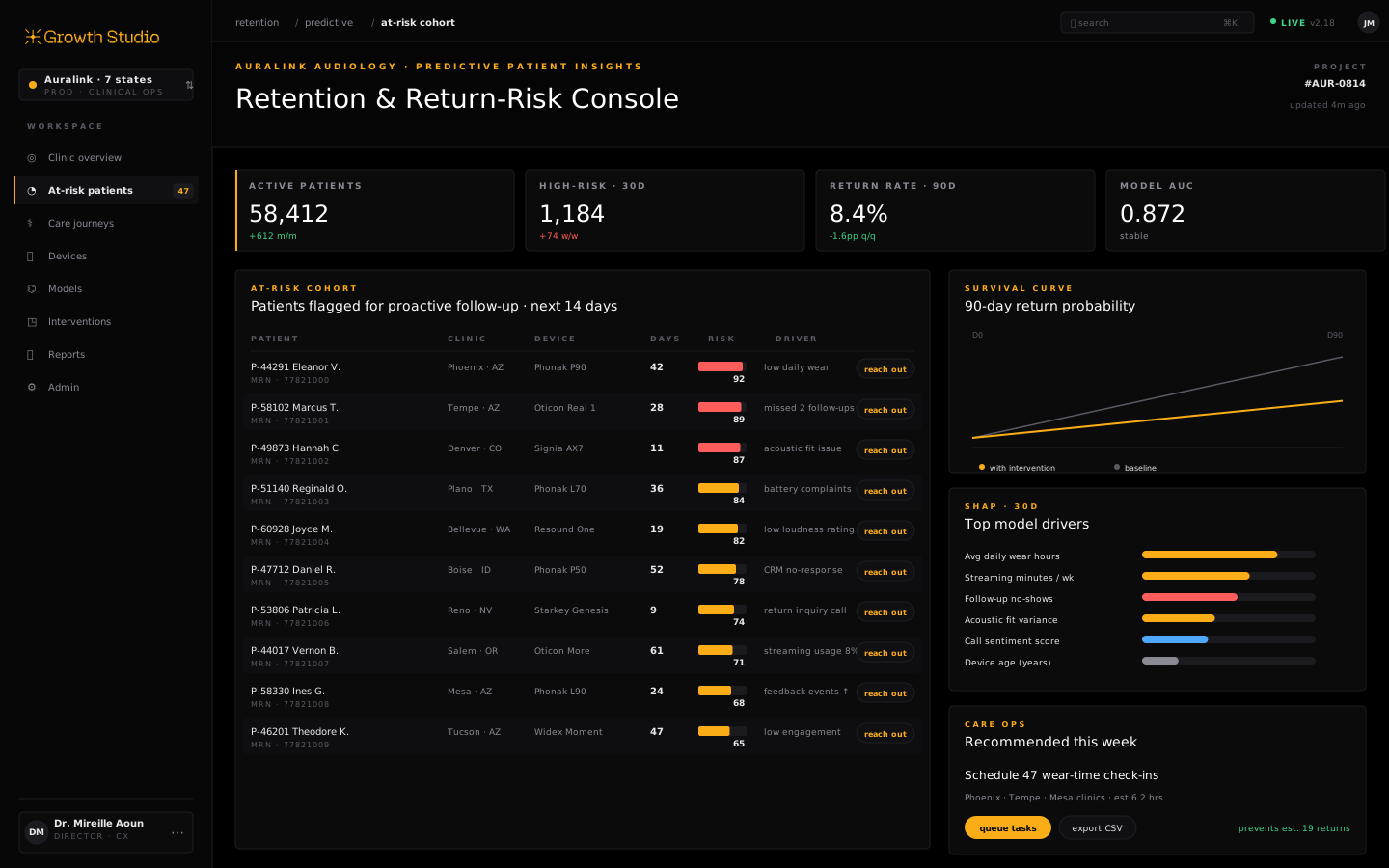
Helping a US-based personalized audiology services provider anticipate patient behavior, reduce hearing aid returns, and improve retention through predictive analytics.
The client operates a growing network of audiology clinics across seven U.S. states, offering personalized hearing solutions and patient-focused care. As the organization expanded through acquisitions, it inherited multiple legacy systems from different clinics, each holding separate pieces of patient, device, and CRM data.
This made it difficult to understand patient behavior clearly. Clinic teams could see outcomes after they happened, but they did not have a reliable way to identify which patients were likely to return their hearing aids, disengage from follow-up care, or require additional support before dissatisfaction escalated.
The challenge was turning fragmented clinic data into early retention signals.
Patient records, hearing aid usage data, device performance history, and CRM interactions were spread across disconnected systems. This created duplicate records, inconsistent reporting, and limited visibility into why certain patients were more likely to return devices or drop out of the care journey.
Without a centralized analytics layer, clinic managers relied heavily on manual reports and reactive follow-ups. By the time a patient showed clear signs of dissatisfaction, the opportunity for proactive intervention was often already missed.
The goal was to build a predictive insights platform that could unify patient and device data, identify at-risk patients earlier, and give clinicians practical recommendations they could use in day-to-day operations.
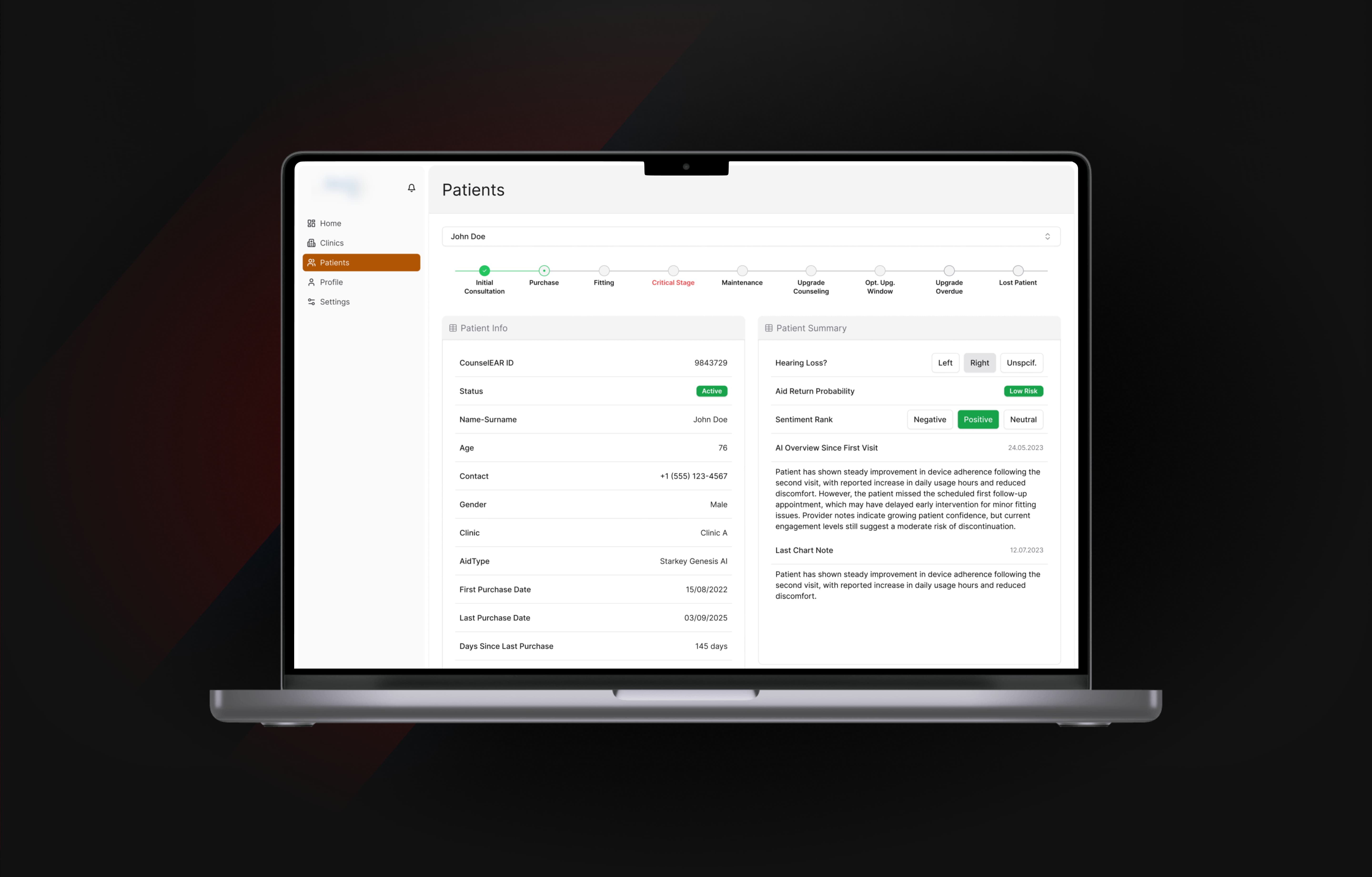
We built a centralized data foundation for patient, device, and CRM intelligence.
The solution started with a unified data integration framework that brought together patient records, hearing aid performance data, usage patterns, and CRM inputs into a centralized warehouse. This created one consistent source of truth across the clinic network and reduced duplicate or conflicting information.
On top of this foundation, predictive machine learning models were developed using Python and Azure ML. These models analyzed historical usage and return patterns to detect early indicators of potential hearing aid returns, disengagement, or patient dissatisfaction.
The dashboard translated predictions into clear clinical actions.
A Power BI dashboard was built to help clinic teams monitor retention metrics, patient satisfaction indicators, device usage trends, and early-warning alerts from one interface. Instead of presenting predictions as abstract scores, the dashboard surfaced actionable signals that clinicians and administrators could use to prioritize outreach.
Automated workflows and reporting templates were also created for clinic managers, making it easier for non-technical teams to interpret predictive insights and apply them during follow-ups, appointment planning, and care personalization.
Unified patient records, device performance data, and CRM inputs
Built predictive models to identify at-risk patients and likely return behavior
Created a Power BI dashboard for retention, satisfaction, and early-warning insights
Reduced hearing aid return rates by 12–15% across pilot clinics
Decreased manual reporting effort by 40%
Improved patient follow-up precision and care personalization
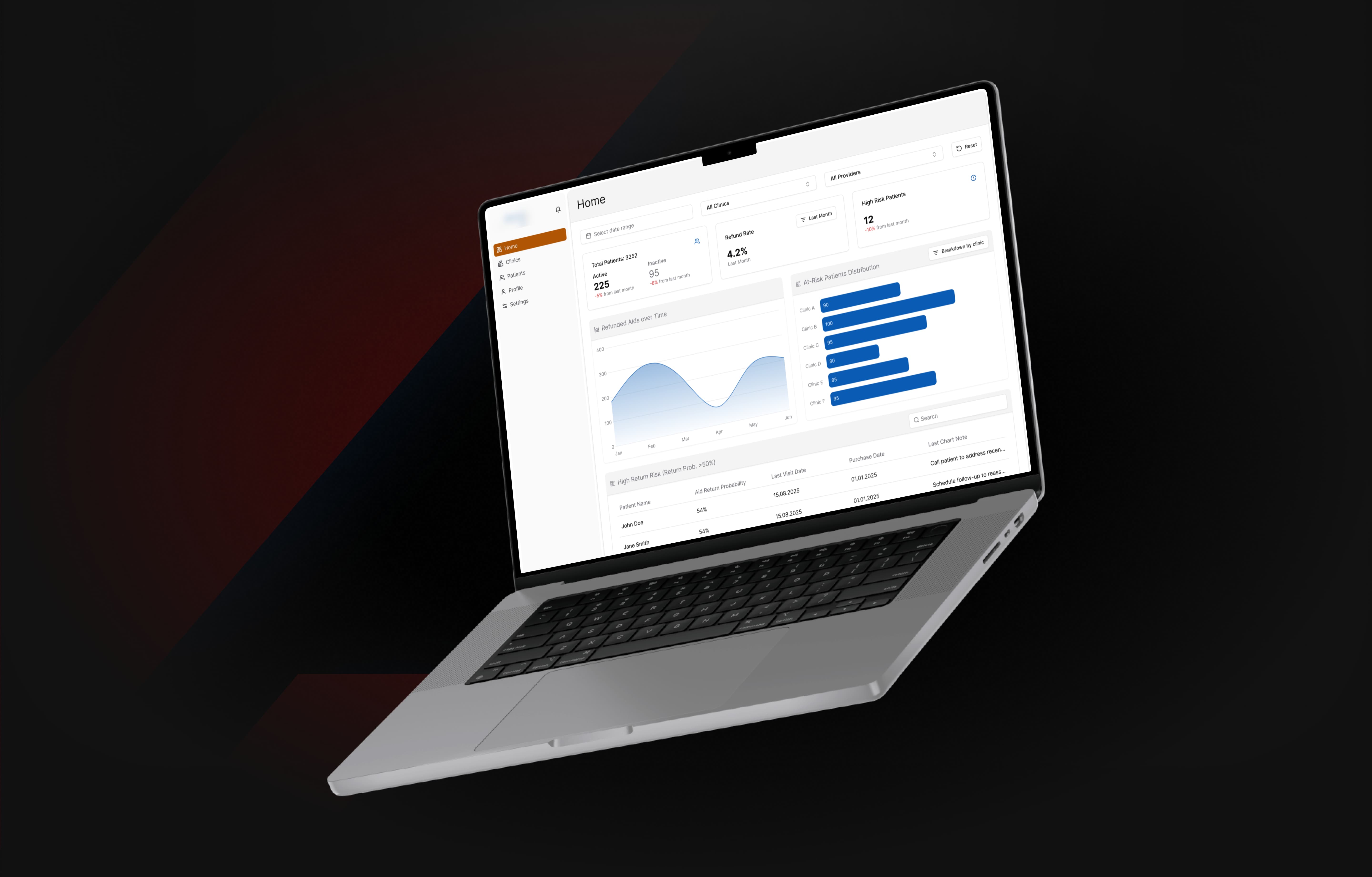
The result was a more proactive patient retention model.
The final platform helped the client move from reactive reporting to predictive patient engagement. Clinic teams could identify risk earlier, personalize follow-up timing, and intervene before issues turned into returns or lost patient relationships.
By centralizing fragmented data and translating behavioral patterns into practical insights, the organization created a stronger foundation for improving patient satisfaction, reducing preventable returns, and scaling consistent care quality across its clinic network.
The value of the platform was not only in predicting patient risk, but in helping care teams act earlier, with more context and confidence.
More works.

" height="56.88889185587561px" id="STzxULXmg" transform="translate(3.556 3.556)" width="56.8888918558755px"/></g></svg>)
Operational Efficiency Enhancement
Operational Efficiency Enhancement Dashboard
Helping a US-based, youth development nonprofit organization, streamline reporting and enhance operational efficiency with real-time dashboards that automate workflows and improve decision-making.
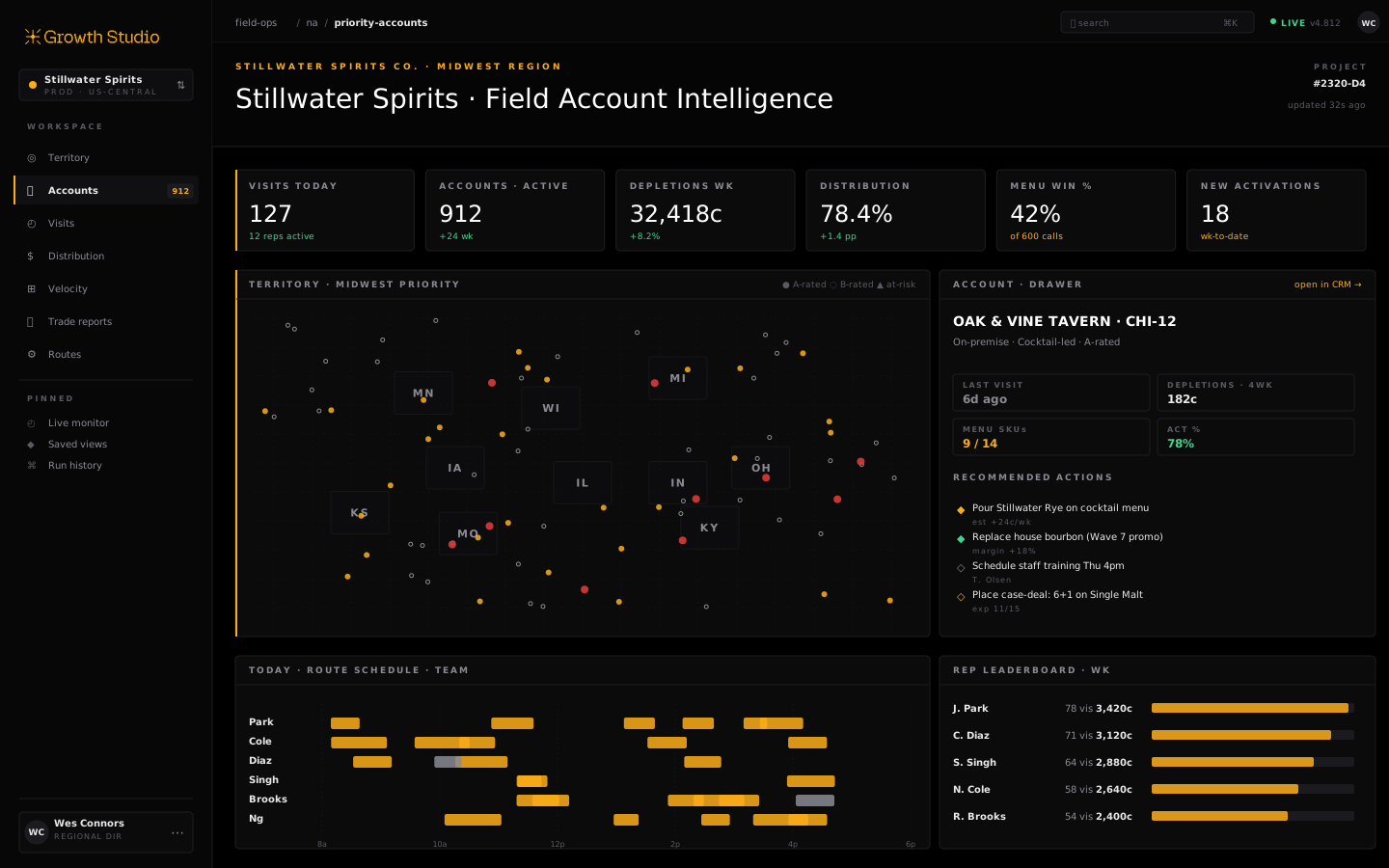
Interactive Sales Intelligence
Interactive Sales Intelligence Dashboard
Transforming a US-Based, Global Premium Spirits Company’s sales operations with precision targeting and mobile-first insights. By combining internal data with real-world restaurant insight.
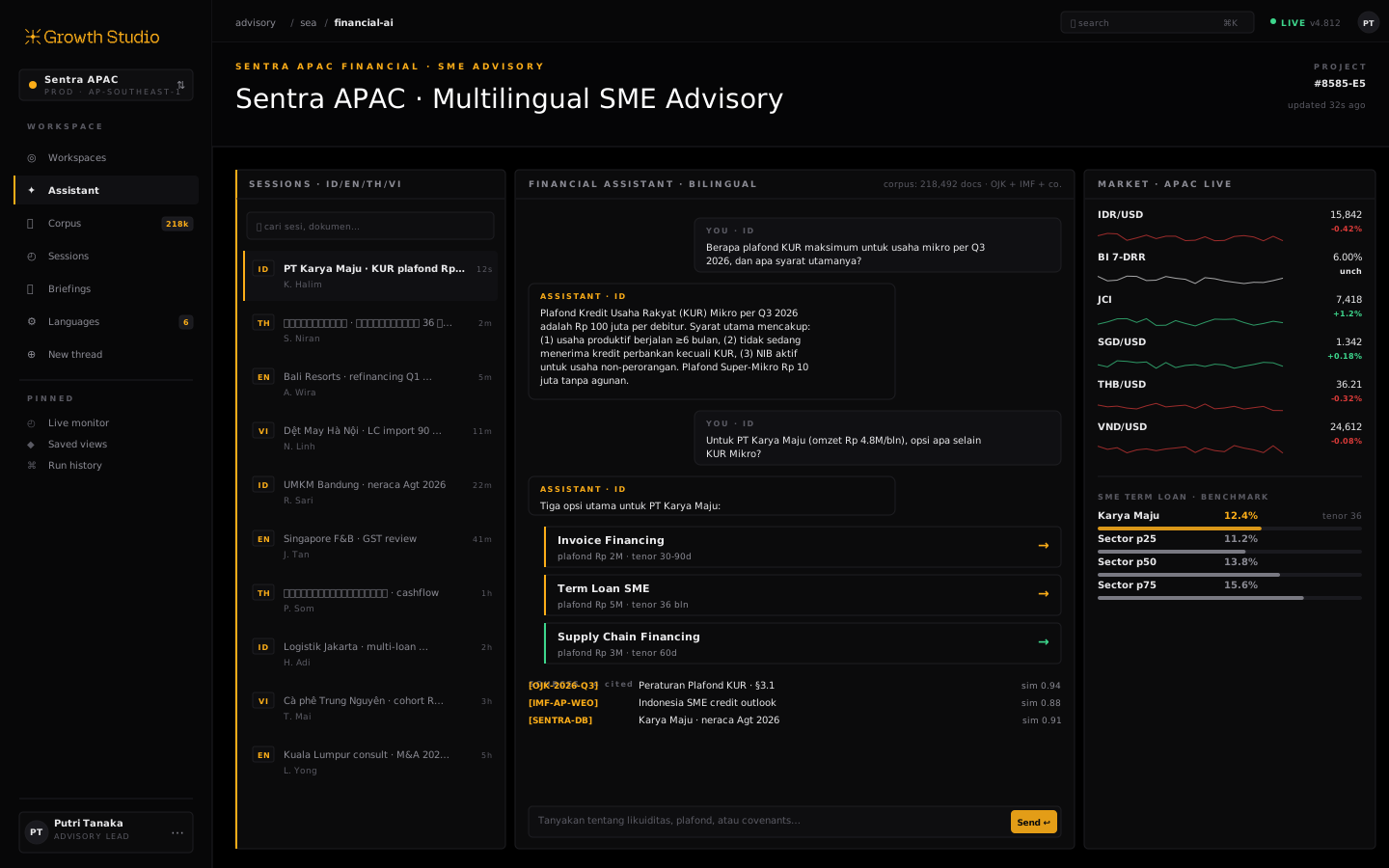
AI-Driven Financial Insights Platform for SMEs
AI-Driven Financial Insights Platform for SMEs
A multilingual, AI-powered financial intelligence platform that centralizes data, enables instant insights, and empowers Southeast Asian SMEs to make confident, data-driven decisions.