Power of Data Analytics: Analyzing Customer Purchase History and Effective Product Recommendations
Learn how data analytics transform customer purchase history into actionable recommendations that drive sales, improve customer retention, and more!

Orhan Gazi Yalcin
CEO & Founder
Share on


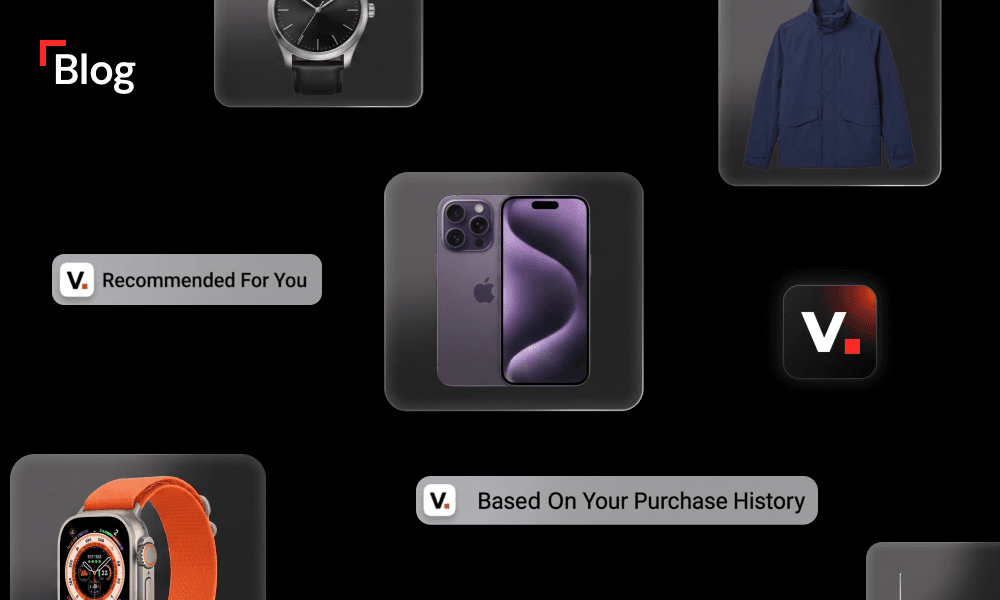
Access to large amounts of data that can help businesses better understand their customers is one of the benefits that companies have.
One area where data analytics plays a very critical role is in understanding customer purchases based on history, customer buying behavior, what the emerging patterns and preferences are. With the presentation of this data, any company can design personalized recommendations and other marketing strategies, targeting specific customers who will be satisfied with products that are likely to increase sales and improve conversion rates through data-driven product recommendations.
This article details how data analytics can be used to analyze customer purchase history and recommend products effectively, especially for businesses looking to understand how to use customer purchase history for personalized product recommendations.
Let’s get started!
Collecting The Data and Integration of Techniques
Collecting and organizing data are the first steps businesses should take to conduct an analysis of customer purchase history.
This includes transactional data: purchase dates, products (as well as quantities) and prices; also note that customers' demographic details and preferences can enable the creation of a complete customer profile for better customer segmentation and personalized marketing automation.
Point of sale systems, Customer Relationship Management (CRM) software, online platforms; these are some of the places where this information can be retrieved to build a unified view of the customer journey.
Once the data is available, what businesses need to do next is to apply different analysis techniques to gain insights from this history. Let’s check out these techniques used in customer purchase history analysis and product recommendation optimization.
Descriptive analytics depicts events as the first technique. In simple terms, descriptive analytics helps businesses answer the question, “What have our customers purchased most often, and when?” It narrates historical purchase data using visual illustrations and summaries to reveal patterns, hot products or the customer base that make up customer segments. The main goal is to let businesses know what their customers have bought before so they can identify best-selling products, seasonal demand trends, and repeat purchase behavior.
The science of predictive analytics anticipates the future. It relies on statistical models and machine learning algorithms to predict upcoming customer actions through the analysis of historical data. When businesses can identify customer preferences based on past purchase patterns, they can also accurately determine which products should be recommended. That was our second technique, and it is especially valuable for companies looking to improve product recommendations with predictive analytics.
After that segmentation analysis comes into play. When performing segmentation analysis, customers should be divided into different groups according to their purchasing behavior (including the amount and frequency of their purchases). By recognising different customer segments, companies can design individualized marketing strategies and provide product offerings tailored to the preferences of each segment, which is especially useful for targeted campaigns, higher engagement, and smarter cross-sell and upsell opportunities.
In e-commerce businesses, recommendation systems significantly affect sales by recommending products to customers based on the products they have previously purchased. Information about various products is stored in a database that enables this system to find similar products purchased by other buyers at the same time or previously with these specific products, thus helping them make informed choices. Guarantees are offered as recommender systems that use data analytics insights for personalized recommendations and support AI-powered product recommendation engines that increase average order value and customer satisfaction.
Implementation of Targeted Marketing Strategies
Product recommendation systems allow businesses to analyze customer purchase history and implement targeted marketing strategies by recommending products. This allows the business to understand the needs of its customers, provide special offers to specific people, offer discounts and even send product recommendations through different channels such as email or mobile application. By taking such measures, the business can increase the loyalty of its customers, which leads to increased sales; in fact, customers are more likely to buy the products recommended to them because these products fulfill their needs at the right time, through the right channel, and with messaging tailored to their purchase intent.
For brands asking how to increase sales with personalized product recommendations, the answer often starts with combining customer data analytics, behavioral segmentation, and targeted outreach in one strategy.
Wrapping It Up
VIZIO.AI can help your company in a multitude of ways. With our advanced data analysis and visualization services, we can empower your business with real-time AI insights. We have the expertise to effortlessly connect hundreds of data sources, create robust data lakes, and automate time-consuming data tasks and reporting. By doing so, we enable you to make informed decisions quickly and effectively. Our AI transformation consultancy can guide you in harnessing the potential of AI and predictive analytics, delivering more leads, improved closing rates, and smarter ad spending through scalable data analytics solutions for customer intelligence and business growth.
Whether you need assistance with AI strategy, BI dashboard development, data application development, or robotic process automation, our team of expert data engineers and analysts is here to support you. We work transparently, with a customer-centric approach, to provide customized solutions that align with your unique needs and goals and help you turn raw customer data into actionable insights for better marketing and sales performance.
Trust VIZIO.AI to unlock the power of data and AI, and drive your company's development and growth forward with smarter customer purchase analysis, more accurate product recommendations, and data-backed decision-making.
Read more.
AI & Machine Learning
May 20
5 min
Learn how intelligent operations help teams reduce manual work, and move faster without adding more operational complexity.
Data Analytics
Apr 17
5 min
Learn how data analytics transform customer purchase history into actionable recommendations that drive sales, improve customer retention, and more!
AI & Machine Learning
Mar 27
4 min
If you are investing in enterprise AI strategy or digital transformation acceleration, understanding these failure patterns is not optional anymore.